


 Shkruar nga Pamfleti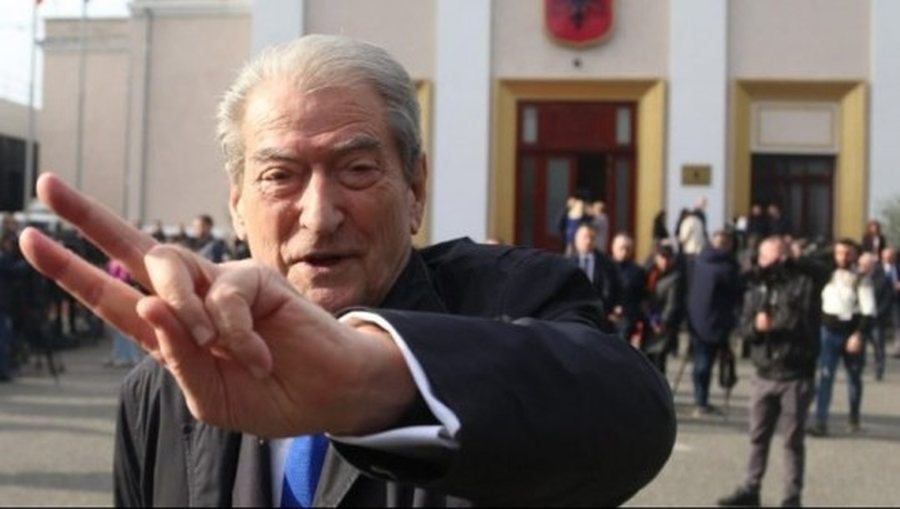
The Special Court has clarified the decision for former Prime Minister Sali Berisha.
The report was then sent to Berisha, while earlier his lawyers were contacted to withdraw it.
In the material of the court it is stated "Taking into account the function of the investigated Sali Berisha, as a politician, deputy of the Parliament of Albania, referring to the opinion No. 18 (2015) of the Consultative Council of European Judges, on the position of the judiciary and its relationship with other State powers, it is quoted that "Politicians should show restraint and not take advantage of their possible dominant position in state institutions to silence criticism, especially by using civil or criminal proceedings against critics; these procedures inevitably have adverse effects on the will of the people and the media to express their views on issues of public interest...Politicians should, in principle, maintain the people's trust in democratic institutions and avoid using demagogic arguments against the decisions of courts, attack individual judges or encourage disobedience to court decisions…”
The ECtHR has emphasized that the increased protection afforded to political speech in a democratic society also increases duties and responsibilities. Thus, just as politicians inevitably and consciously open themselves up to scrutiny of their words and actions by journalists and the public at large, they must display a greater degree of tolerance. Politicians, exercising their right to freedom of expression, can often make public statements that are open to criticism or are intended to be provocative and provoke strong reactions.
For the above, the court wishes to underline the differentiation between the function of the investigated Sali Berisha, as a member of the Parliament of Albania (and in this context, his freedom of political expression) and his procedural position in this criminal process, as a suspect for committing the criminal offense provided by article 260 and 25 of the Criminal Code.
However, political speech, even when protected by Article 10 of the ECHR, can be limited in accordance with the second paragraph of this provision, according to which restrictions on freedom of expression can be imposed in the case when they are determined by law and necessary in a democratic society, in the interest of national security, territorial integrity or public safety or to protect the reputation or rights of others. While the ECtHR has repeatedly found that there is little room for restrictions on political speeches or the debate of issues of public interest, emphasizing that: "...tolerance and respect for the equal dignity of all human beings constitute the foundations of a democratic, pluralistic society. That being so, in principle, it may be considered necessary in some democratic societies to sanction or even prevent all forms of expression that spread, incite or justify hatred based on intolerance, provided that the 'formalities', 'conditions', The 'restrictions' or 'penalties' imposed are proportionate to the legitimate aim pursued".
The Court also reiterates that consideration must be given to the need to strike the right balance between the various interests involved. Because of their direct, continuous contact with the reality of the country, the courts of a state are in a better position than any international court to determine how, at a given time, a fair balance can be struck . For this reason, in matters under Article 10 of the Convention, Contracting States have a certain margin of appreciation to determine the necessity and purpose of any interference with the freedom of expression protected by this Article."
The decision further states "During the trial, it was proven that it was the latter who deliberately did not follow the orders of the court, thus not fulfilling his obligations under this decision."
Based on these reasons, Berisha tightened the measure.


Lini një Përgjigje