


 Shkruar nga Pamfleti
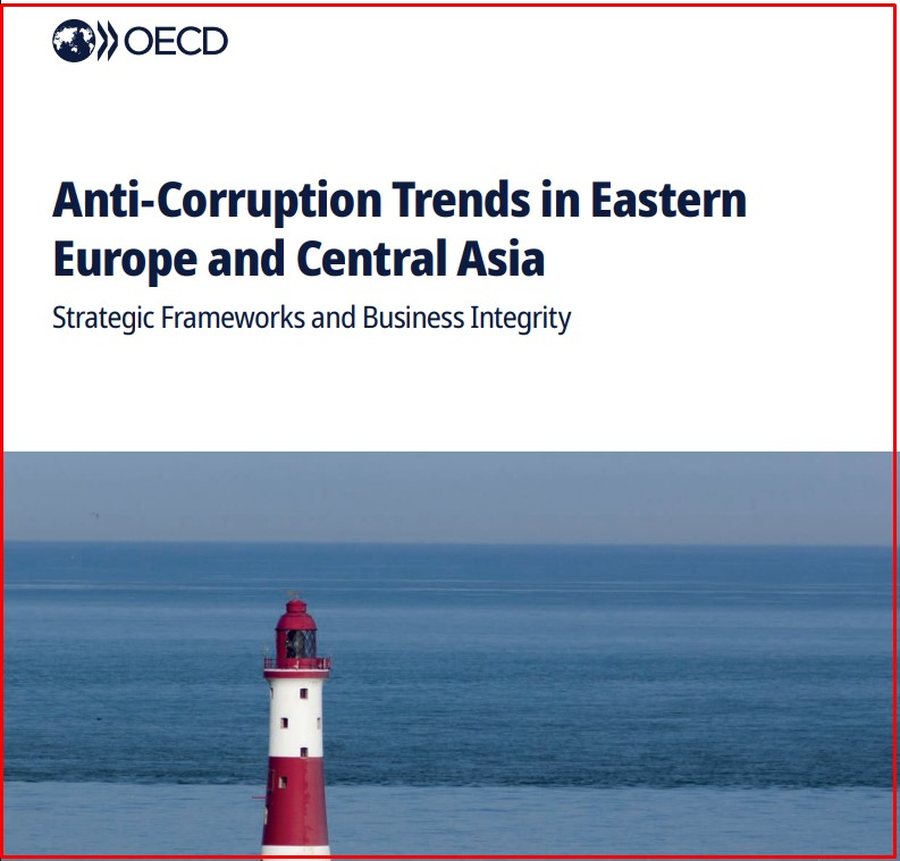
A new OECD report exposes the contrast between strategies on paper and the reality of the fight against corruption in the Western Balkans. Albania, although it has drafted a national strategy, remains lagging behind in implementation, transparency and effective involvement of non-governmental actors...
A comprehensive report by the Organization for Economic Co-operation and Development (OECD), recently published, sheds light on the state of the fight against corruption in Eastern Europe and Central Asia. The analysis covers 21 countries, including Albania and the rest of the Western Balkans, highlighting both progress in building anti-corruption strategic frameworks and systemic shortcomings in the actual implementation of these strategies.
The OECD emphasizes that “almost all countries in the region have adopted national anti-corruption strategies and increased the involvement of civil society,” but in parallel, “only a limited number of countries have applied an approach based on real risk analysis.” Albania is mentioned among the countries that have not developed an in-depth analysis of the most corrupt sectors, as North Macedonia and Serbia have done, for example.
In point 1.1 of the report, the OECD highlights that only North Macedonia and Serbia have prepared full analytical reports on public integrity risks. For Albania, the document raises concerns that the strategic analyses are shallow and not based on verifiable data.
Another problematic aspect is the transparency and quality of public consultations. While 17 countries in the region have organized consultations on their draft strategies, only 7 have published all the comments and relevant responses. Albania, although it has a legal mechanism for public consultations, has not fully fulfilled this obligation. “ Only 13 countries have included civil society actors in the strategy monitoring process, and only 7 have ensured full transparency for public comments ,” the report states.
Regarding the implementation of the strategies, the OECD is critical: “ Nine out of 18 monitored countries have implemented less than half of the activities foreseen in the anti-corruption action plan .” For Albania, the report highlights the lack of measurable indicators in the annual monitoring reports, as well as the lack of independent assessments of the impact of the strategies.
In the section on “Integrity in State-Owned Enterprises”, the OECD calls it concerning that only a small number of countries have clear mechanisms for the transparent selection of board members. Albania is mentioned as a country where appointments in public enterprises are not based on clear criteria of merit or independent representation.
Another weak point for Albania is the lack of an institution dedicated to protecting the rights of businesses, such as the Business Ombudsman, a structure that exists in only three countries in the region and is completely absent in Albania.
The most critical quote from the report comes in the OECD’s conclusion: “There is a large gap between policy design and effective implementation… Countries need to do more to include measurable indicators, monitor implementation and increase public accountability in anti-corruption processes.” / Pamphlet







Lini një Përgjigje