


 Shkruar nga Pamfleti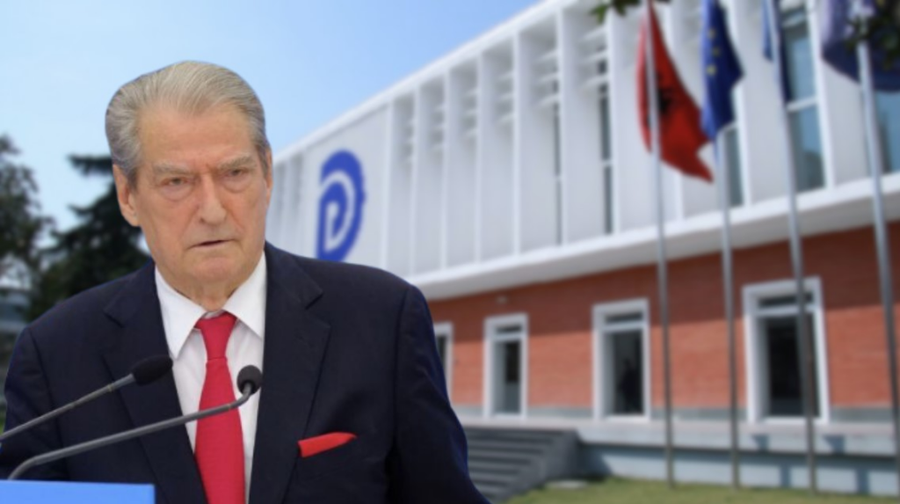
In parallel, there is talk of a reorganization, which is where divisions or groupings at the DP headquarters have begun, not excluding alliances that could be considered 'unimaginable'.
The Democratic Party recorded one of the deepest defeats in the May 11 elections, although officially the process is considered a farce, while the Democratic leader said that he will not recognize the result. However, in September, the DP deputies, together with their allies, will enter the Assembly, despite public contestations and every claim that the citizens' vote was manipulated by pressure or through buying.
In the first days after May 11, there was a flurry of voices demanding accountability, the implementation of the so-called 'Neni Basha' that forced Sali Berisha to resign and not run for re-election as leader of the DP. But the voices soon died down, and there was talk of in-depth analyses in the DP forums, to find the causes of the loss. Essentially, the Democrats are saying every day through Berisha that the loss was due to manipulation, which seems to be a way accepted by everyone to avoid responsibility.
At the DP headquarters, there is talk of two scenarios, one that would involve a quick reorganization, aiming simply to change a few names, and another that seems to give everyone time to do their calculations, and which has to do with the 2026 DP National Assembly.
And within the framework of expected developments, rapid or not, groupings have been formalized, not excluding alliances that could be considered 'unimaginable'.
Thus, Gazment Bardhi, the head of the DP Parliamentary Group, is in an alliance with Flamur Noka, the Secretary General, and one of Berisha's most loyalists. At least what is being said in the DP headquarters is that this 'alliance' started before May 11 and continues, which could guarantee the former Berisha critic, who led the electoral campaign in Fier, the position as Chairman of the Parliamentary Group until the spring of 2026 (April-May).
And also, Flamur Noka can continue his function as Secretary General "untroubled" until the spring of next year, when the National Assembly of Democrats is expected to be held, where the new forums will be elected, and consequently the President, Vice-Presidents, Secretary General, members of the Presidency, etc.
This is the option that seems to suit most of those who hold a position or post, as each of those who were elected in the turbulent developments of late 2021 and the first months of 2022 will continue to hold party functions.
Meanwhile, Oerd Bylykbashi seems to be taking Agron Gjekmarkaj's place. Despite the fact that the latter is one of the two regional leaders, along with Luciano Boçi, who emerged as winners on May 11, it seems that he will have to step down from his position as Deputy Speaker of the Assembly.
Bylykbashi has long been considered in the DP headquarters as 'the man who maintains institutional contacts' not only in correspondence within the country, but also in relations with foreigners. As one of Berisha's most loyal people, the position of Deputy Speaker of the Assembly would give Bylykbashi the opportunity to continue maintaining correspondence, but also having a state office, despite the fact that it is more of an honorary position. But he would also be engaged in discussions for a complete electoral reform, but also in any discussion launched on a constitutional reform.
And likewise, this 'honorary position' would keep him engaged in the DP's leadership, being one of its vice-chairmen.
Agron Gjekmarkaj may be approached for the position of Chairman of the Parliamentary Media Committee, a position held by Ina Zhupa during the previous legislature. The opposition in the new legislature will have the right to lead 3 of the parliamentary committees, where it seems that Jorida Tabaku has a secure position to lead the one on European Integration. Tabaku, as the most voted MP on the open lists of the DP, seems to be content with that, without claiming party positions, at least until the spring of 2026. And likewise, Albana Vokshi will take over the leadership of the Parliamentary Committee on Health, but by giving up her position as chairwoman of the LDG, a partner organization of the DP, but which guarantees the leader a secure place on the lists of MPs.
Luciano Boçi will continue to be one of the vice presidents of the Democratic Party, a position he has held since 2022.
Ilir Alimehmeti, the second most voted from the DP lists, but who was unable to obtain a mandate as an MP on May 11, has also expressed ambitions for a position in the leadership of the DP. And if due to some unexpected development within the closed list of Tirana, Alimehmeti were to enter the Assembly, perhaps he would have fulfilled his ambition. Despite being considered one of the new names and an impeccable figure in the ranks of the DP, he has not been able to create a group of his own within this party, being more of a single electron, who from time to time, throws out ideas, but it is not known how many people can support him with votes.
Belind Këlliçi also aims for a position through his alliances in the DP, although the electoral disappointments as a candidate for Tirana and then as a district leader seem to have tarnished his image. And as if this were not enough, a series of attacks were launched against him by media close to the Berisha family, giving clear signals that his positions are not where he could have thought. Despite appearing at the doors of SPAK whenever Berisha has to appear in 'respect for security measures', even standing by the side of his son-in-law, Jamarbër Malltezi, the MP seems to have lost the battle for his ambition to be Secretary General of the DP.
The same position is also aimed at by Ervin Salianji, the former MP who served a year in prison, by decision of the Court of Appeal for what is known as the 'Babale File'. Salianji appeared active in the first days of his release from prison, but then there was a public retreat, perhaps in anticipation of developments in the DP.
The positions of vice-chairmen, the Secretary General and the Secretariat as a whole, according to the DP statute, along with the members of the Presidency, are elected by the National Council. For the latter, several ideas have been put forward to reconfigure it, to reduce the number of members, and to have a more realistic representation. This means that if these ideas are taken as a basis, then a National Assembly should be convened, whose members elect the members of the Council, a process that may take time and may be supported by the leadership 'dome'.
And under such conditions, it seems that everything will remain to be seen in the fall of 2025, when it is said that the analysis will begin, but there are no deadlines for when it can be completed. /Pamphlet/


Lini një Përgjigje