


 Shkruar nga Pamfleti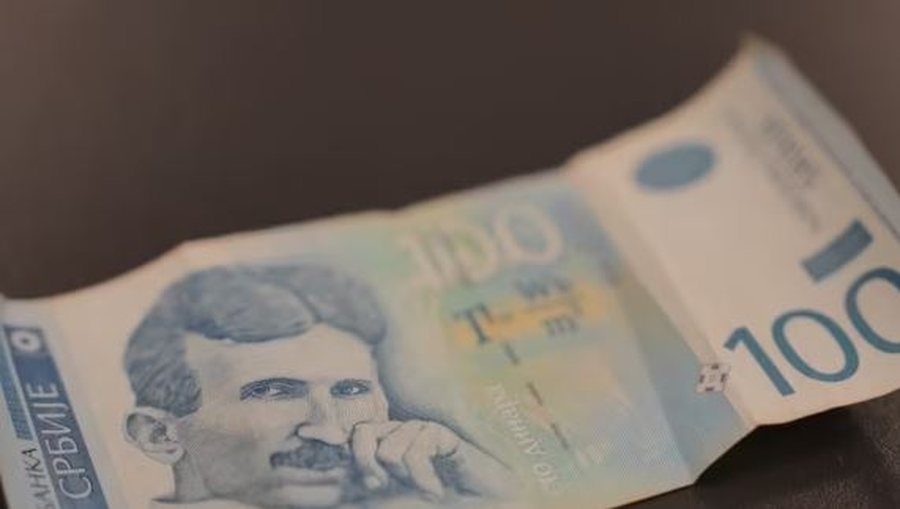
If you go into shops or cafes in the Serbian-majority municipalities in northern Kosovo, you will see prices mostly in Serbian dinars. If you did not have dinars to pay, you are also accepted in euros. Some sellers may then ask you: Do you want change in dinars or euros?
In some areas inhabited by Serbs south of the Ibar, the prices are displayed both in dinars and in euros.
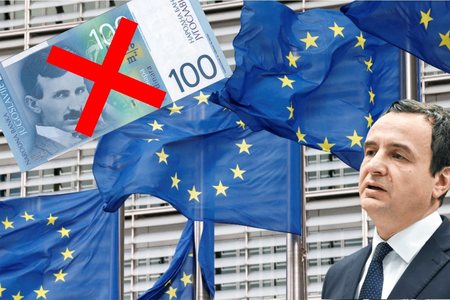
This practice, since after the war, was not even discussed in Kosovo until January 17 of this year. On that day, the Central Bank of Kosovo (CBK) presented a regulation that determines that the only currency for cash payments in Kosovo is the euro.
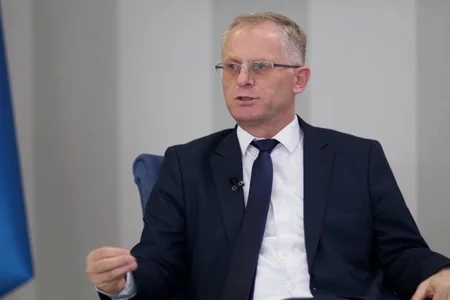
The decision of the CBK has started to be implemented from February 1, 2024, despite the calls of the international factor for its postponement. The Deputy Prime Minister of Kosovo, Besnik Bislimi, has pledged that an easy transition will be ensured.
Kosovo is not part of the Eurozone - which consists of 20 member countries of the European Union - but has had the euro as its main currency since 2002. According to Article 11 of the Constitution of Kosovo, "a single currency is used as a valid means of payment".
Why all the fuss about the dinar?
The local Serbs, and the authorities in Belgrade, claim that the CBK's decision endangers the life of the Serbian community in Kosovo.
The Kosovo authorities have reiterated that anyone who has acted so far in violation of the CBK regulation has violated the law.
Through the parallel system, Serbia pays Kosovo Serbs salaries, pensions, child allowances and social benefits in dinars.
For years, the People's Bank of Serbia has sent the dinars to a safe in the municipality of Leposavic, in the north of Kosovo, and they were then transported by the international company Henderson.
Some have blamed the Kosovo Customs for allowing such a practice, since the CBK is the only institution authorized to import and export euros and other currencies in Kosovo.
Why was the regulation adopted now?
The head of CBK, Ahmet Ismaili, has mentioned financial integrity as the main reason for the implementation of the single currency regulation, as he spoke on the second channel of Radio Television of Kosovo.
According to him, the decision protects Kosovo "from counterfeit money, from the financing of terrorism, from the use of currencies that are not original".
Professor of Economics, Berim Ramosaj, also mentions the danger of dirty money, and the possibility of producing money from Serbia without a cover, to bring it into Kosovo.
Others mention fiscal evasion, in the absence of control over the dinar.
Is the decision political?
Professor Ramosaj estimates that not.
But there are rumors that the approval of the regulation has mixed it with politics, since, in principle, there is no need to approve a new regulation for a law that already exists.
How much money does Belgrade allocate for the Serbs in Kosovo?
The Law on Local Government Finances in Kosovo allows the sending of financial aid from Serbia.
The Serbian state has allocated 139 million euros for the Serbs in Kosovo for 2024 - about 11 million more than in 2023.
Some experts believe that Serbia's investments in Kosovo have been non-transparent over the years and that it is impossible to determine the total amount.
The Serbian president himself, Aleksandar Vučić, said a few days ago that he does not even dare to tell how much money Serbia spends on its "needs" in Kosovo.
What should the Serbs do now?
Initially, it is expected that the CBK and the People's Bank of Serbia will find a mechanism that enables transparent transfer of money.
In this way, Kosovo Serbs will be able to receive funds from Serbia in licensed commercial banks. Consequently, Serbian citizens will have to open accounts in those institutions. Raiffeisen Bank, for example, has branches in the north, where more than 10 microfinance institutions are active./REL



Lini një Përgjigje