


 Shkruar nga Pamfleti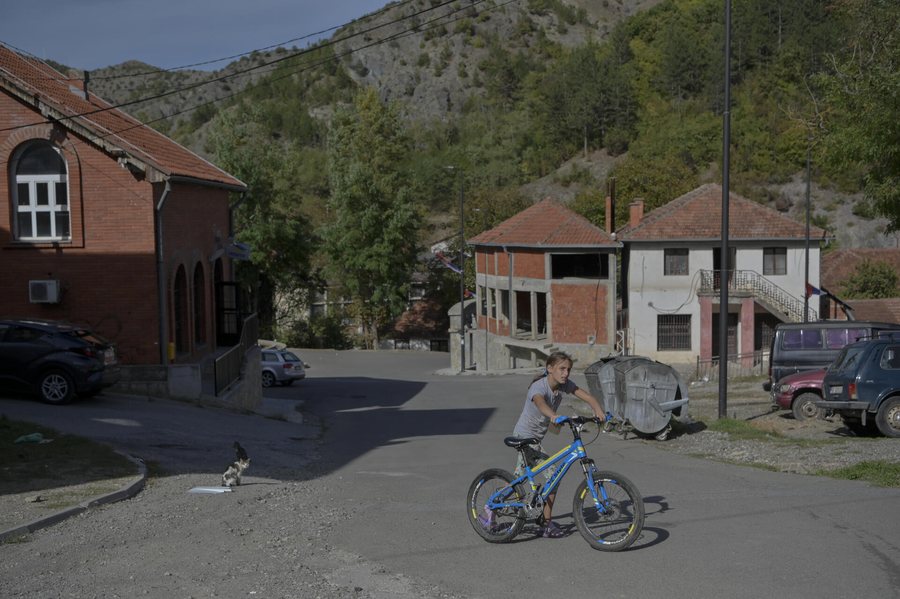
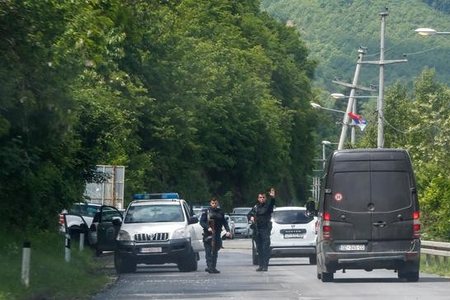
Banjska has returned to her hibernation again. Only the bullet holes in a few windows and the broken gates of the Orthodox monastery towering over this modest village in northern Kosovo still bear the traces of the violent clashes that broke out on September 24, by a commando of heavily armed Serbs.
Two weeks later, on October 9, the owner of the only grocery store in this country of several hundred elderly souls remembers everything as if it happened the day before.
"My wife came to wake me up in the middle of the night saying they were shooting. At first we thought they were smugglers, but later we realized it was worse. It's useless to talk about manliness, I was very, very scared, - he says from the stairs of the store, refusing to give his name.
Since the attack, about 40,000 Serbs who live in the north of this Balkan country, with an Albanian majority, are under pressure. Everyone is afraid of a return to war, twenty years after the one in 1999, which led to Kosovo's independence.
"Like 95% of the village, I didn't suspect anything," defended the shopkeeper, describing the commandos as a "criminal gang".
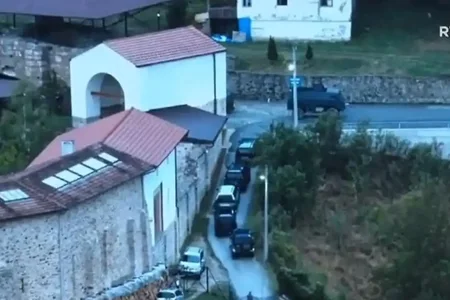
Heavily armed, wearing unmarked uniforms and equipped with over thirty vehicles, some of which were marked with fake KFOR logos, the Serbian commandos would take to the streets of the village on the night between 23 and 24 September. The operation began at 2:34 am. At this very hour, a Kosovo police patrol, which went there to inspect two trucks, installed to block the small bridge, which is located at the entrance of the village, was hit by the explosion of a remotely controlled mine.
One of the three policemen, Afrim Bunjaku, was killed and another was injured.
The Serbian armed unit faced for hours with the Kosovar special forces urgently sent from Prishtina, then retreated inside the monastery, where a group of pilgrims was located, and finally left through the forest, which leads to Serbia. The balance of this day, the most violent of the last decade in Kosovo: three terrorists killed, three more arrested and dozens on the run.
Among the latter was their leader, who was quickly identified through drone footage: Milan Radoicic, a powerful local Serbian political leader long known for his ties to organized crime.
Five days later, the person in question admitted his participation in the violent events and announced, through his lawyer in Belgrade, that he took this action "personally" and "without informing the Serbian government".
In his statement, he claimed that he led that commando to "encourage the Serbian people of this region, to resist the terror of the [Kosovar] regime" and to "create the necessary conditions for the realization of the dream of freedom". of the minority of 100,000 Serbs in Kosovo.
The latter refuse to recognize the independence of this territory, which they consider to be the cradle of their nation. For fifteen years they have been dreaming of returning to the Bay of Belgrade.
But this version of events has been seriously questioned by many disturbing elements that have brought to light the findings of the Kosovar investigators.
"It wasn't just a group of disgruntled citizens who organized an attack, it was clearly a paramilitary offensive from Serbia. A group of "little men dressed in green" who aimed for an annexation in the style of Crimea", the Kosovo president, Vjosa Osmani, told Le Monde, drawing a parallel with the Russian operation carried out by soldiers without distinguishing marks on the Ukrainian peninsula. , in 2014. "Their main objective was to conquer the territory in the North, to try to separate this region from the rest of Kosovo", says the Minister of Defense, Ejup Maqedonci. "We found maps that show that there must have been three areas of operation with more than 200 people involved", assures the minister, estimating that the random police check in the middle of the night caused the operation to fail, causing crash sooner than planned.
Drone videos released by Pristina actually show heavily armed men ready to fight after training for days at military bases inside Serbian territory.
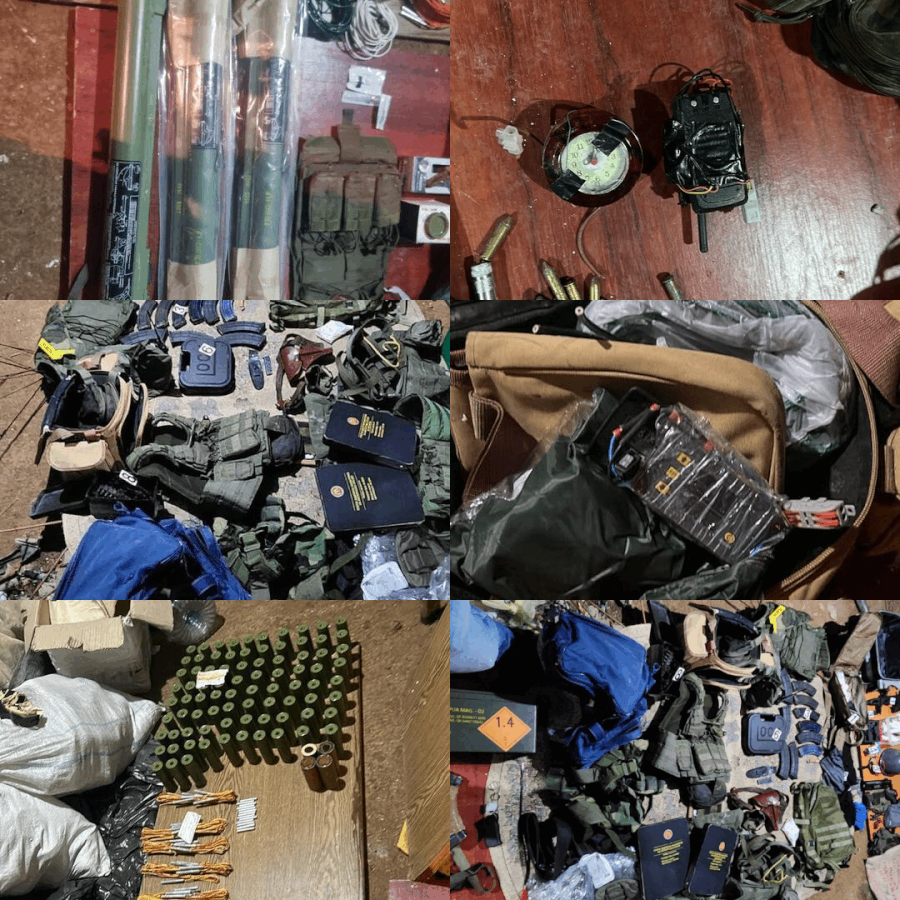
In the abandoned vehicles near the monastery, the Kosovo authorities seized a real war arsenal: more than 40 anti-tank rocket launchers, nearly 200 grenade launchers, dozens of automatic rifles, mines, 80,000 cartridges... "I don't think that something like this is possible without connection with the Serbian government", accuses Mr. Macedonia. There, many of these weapons have release notes from Serbian state-owned factories, sometimes just months before the September 24 operation.
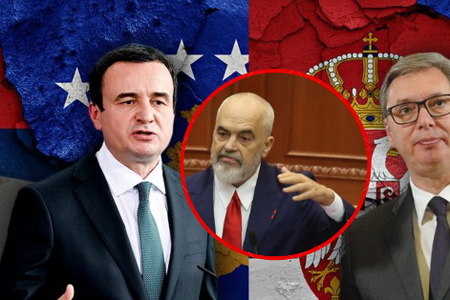
The authorities in Belgrade, who continue to claim that they have nothing to do with the attack, insist that Mr. Radoicic may have obtained this arsenal on the "black market" in Tuzla, Bosnia-Herzegovina. "It is easy to find weapons" in the Balkans, said Serbian President Aleksandar Vucic, in one of the rare interviews given for this event.
According to him, Mr. Radoicic had committed "a major criminal offense" without warning him himself. However, the Serbian leader knows well the head of the commandos, who is the vice president of Lista Srpska, the main party of the Kosovo Serbs, directly connected to the Progressive party and Mr. Vučić. "Aï was an ally, but not a friend", said Vucic on British television Sky News, after having changed his version several times over the past few years.
45 years old, with close-cropped hair and a three-day beard, Radoicic is a man in the shadows who has long maintained a controversial reputation in northern Kosovo. Officially the head of construction companies and hotels, he was punished, at the end of 2021, by US sanctions for involvement in endemic "corruption" in the north of the city of Mitrovica. This is an area where traffickers thrive, taking advantage of the legal vacuum created by the sovereignty conflicts between Belgrade and Pristina.
Radoicic is also accused of having a hand in the murder of Oliver Ivanovic, an opponent of Mr. Vucic, who was shot dead in 2018 after denouncing the mafia's role in dominating the Serbian minority.
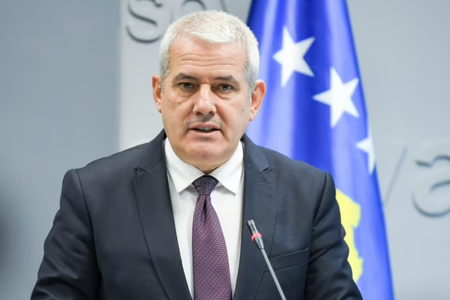
Prishtina broadcast widely in the media the images of Radoicic's luxurious lakeside villa. With its swimming pool, billiards and grand terrace, it contrasted with the surrounding poverty. "It is clear that we are not dealing with a "freedom fighter" but with a Pablo Escobar," Xelal Sveçla, the Kosovar interior minister, joked.
After presenting himself to the Serbian police, Mr. Radoicic was charged with a crime against public safety. However, Belgrade has already announced that it will refuse his extradition to Pristina, in accordance with its policy of not recognizing the Kosovo judicial system. The commando leader chose as his lawyer a man known throughout the Balkans for his nationalism and closeness to Moscow: Goran Petronijevic, the former defender and war criminal Ratko Mladic.
The latter was this September in the occupied areas of Ukraine as an observer of the farcical elections organized by Russia.
In the past, he also protected one of the members of the Russian-Serbian commandos who entered Montenegro in 2016 to carry out a coup.
This was also a failed operation which was very similar to what happened recently in Kosovo. Neither Mr. Radoicic nor Mr. Petronijevic did not want to answer Le monde's questions.
After being arrested for forty-eight hours, Mr. Radoicic was released on bail on October 4 by a court in Belgrade, on the grounds that he had admitted to all the facts he is accused of. This release was described as "unfortunate" by the French presidency, the Elysée, while Western diplomats are still waiting for Belgrade to present a credible version of events.
But so far Mr. Vucic, who claims he wants to join the EU, without breaking his historical ties with Moscow, prefers to play the nationalist card. While condemning the death of the Albanian policeman, the authorities of Belgrade have declared heroes of the three attackers who were killed in the exchange of fire against him.
A day of national mourning was declared in their honor and hundreds of people attended the funeral. In North Mitrovica, notices attached to the walls of the city remember the men who "died bravely, fighting for their homeland". / Le Monde


Lini një Përgjigje