


 Shkruar nga Pamfleti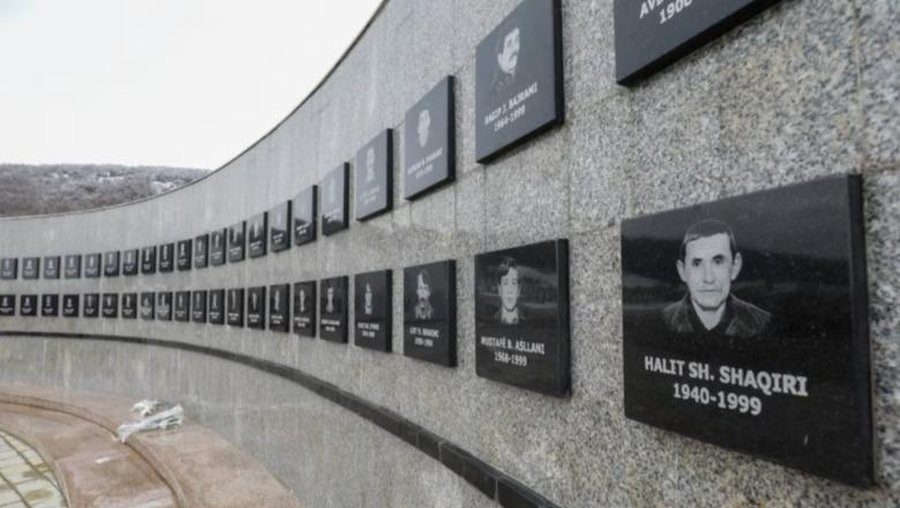
The Kosovo Special Prosecution Office has filed an indictment against 21 people for the massacre in Recak, where 45 civilians were killed on January 15, 1999.
An indictment was filed against OS, RM, KJ, GR, ZH.T., BJ, ML, RM, D.GJ., BM, DJ, M.SH., DA, SV, BM, ZS, MJ, GP, DN, Ç.A. for the criminal offense of "war crime against the civilian population".
They are accused of killing 42 civilians in Reçak, Shtime, during an operation by Serbian police forces.
The prosecution has proposed that their trial be held in absentia, as they are "inaccessible to the justice systems" of Kosovo.
According to the indictment, in the period 1998-1999, the defendants, as members of the army of the former Yugoslavia, the "243rd Mechanized Brigade", the 3rd Army, known as the "Pristina Corps", as well as members of the Serbian Ministry of Internal Affairs, "also committed inhumane treatment, destruction of property, mass deportation and ethnic cleansing of the civilian population".
The prosecution said that the defendants had surrounded the village of Recak from places called "Pishat", "Geshtenjat" and "Çesta".
Then, according to the indictment, they shelled the village, conducted house-to-house searches, and separated the men from the women and children, forcing them to leave the village, "while executing the detained men."
"Investigations have established that the defendants exercised physical violence against civilians, beating them with gun butts, kicks, wood, chains and other hard objects," the Prosecution's announcement said.
At that time, as a result of this operation by Serbian forces, nearly 20,000 civilians from the villages of Reçak, Topill, Petrovë, Kraisht, Mullapolc, Dremjak were expelled from their homes, the Prosecutor's Office said.
Trial in absentia, which the Special Prosecution has requested for this case, is possible in Kosovo following changes to the Criminal Procedure Code, made in 2022.
However, such trials can only take place on the condition that the prosecution and the court have exhausted all means to ensure the presence of the accused.
However, this Code stipulates that persons tried in absentia have the right to an unconditional retrial when arrested.
The documentation of the crimes committed in Racak was done by William Walker, who in 1999 served as head of the Verification Mission of the Organization for Security and Cooperation in Europe (OSCE).
After the Recak massacre in March 1999, NATO attacked military and police targets in the former Yugoslavia.
After 78 days of attacks, the bombings ceased on June 10, 1999, with the adoption of United Nations Security Council Resolution 1244.
NATO's intervention in Kosovo also enabled the return to their homes of more than 800,000 refugees, displaced persons inside and outside Kosovo.
In the war in Kosovo in 1998/99, over 13,000 civilians were killed and thousands more disappeared.
Nearly 1,600 people are still missing – most of them Albanians.
In recent years, Kosovo has increased the number of indictments in absentia for war crimes committed during the last war.
Earlier this year, the Special Prosecution Office filed an indictment in absentia against 21 suspects for the forcible expulsion of over 800,000 Albanian civilians from Kosovo during the war./REL


Lini një Përgjigje