


 Shkruar nga Pamfleti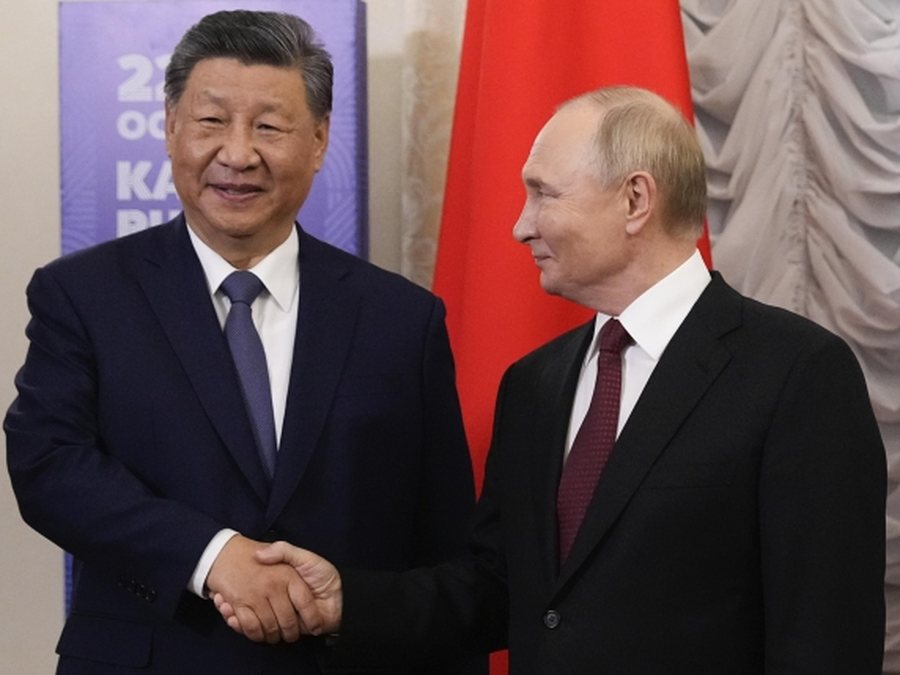
Russian leader attacks EU militarization, doesn't mention US at all...
As always happens during his visits to China, Vladimir Putin gave an interview to the "Xinhua" agency, during which he addressed the most current topics of geopolitics and the state of the world, without ever mentioning the United States. A circumstance that at first glance seems strange, especially after what happened last month between Alaska and Washington, but which becomes completely understandable if we consider the public and audience to which the Russian president was addressing.
After expressing respect for the future host, Xi Jinping, “a true leader of a great power with a broad strategic vision,” and mentioning the economic relations between Moscow and Beijing that, according to him, have reached “an unprecedented level,” Putin brought up the concept of the “Global Majority.” By this term, he meant that critical mass of countries in the Global South that represent a new multipolar order that the Kremlin has long theorized. “We and China share broad common interests and remarkably similar positions on fundamental issues. We are united in our vision of building a just and multipolar world order, with a special focus on the countries of the Global Majority,” he said.
But the Russian president did not stop at general words: he also indicated the place where, in his opinion, the change, if not the reversal, of the global balance of power should begin. Astutely referring to the UN General Assembly resolution of December 4, 2024 entitled “Uprooting colonialism in all its forms and manifestations,” Putin declared that Russia and China “support the reform of the UN in order to fully restore its authority and reflect today’s realities,” calling in particular for the reform of the Security Council “to make it more democratic and to include states from Asia, Africa, and Latin America.”
The double-headed eagle, the symbol of Russia, has always been symmetrical only in appearance. For most of its history, it has looked towards the West. But after the collapse of the Soviet Union, and long before Putin came to power, Russia began to look towards the East. As early as 1993, the “Foreign Policy Concept” was the first official document to recognize Asia as “one of the centers of world economy and politics,” emphasizing that to become an important actor in the region, it was enough to “not repeat the European experience.” The idea of a large Eurasian space is therefore old for Russia, but now Xi Jinping has become its “main shareholder,” not only within the framework of BRICS, but also as the leader of a vast area that includes Latin America and Africa, in open challenge to the old world order.
“Eurasia without the West: China will show a new world,” is the title of the editorial of the Russian state agency RIA Novosti, marking the start of Putin’s visit to China. “Yes, it is a challenge. More precisely, a disagreement with the West, and first of all with the United States, which proclaims itself the guarantor of global security. The colonial era of their dominance in Asia has long ended, but their influence and interests have not disappeared. The Atlanticists continue to try to ‘lead the peoples’ of Asia, exploiting their contradictions, sometimes even openly pitting them against each other.”
Putin did not hesitate to highlight the gap that already separates these two worlds. “In Russia, we will never forget China’s heroic resistance. We see that in some Western countries, the results of World War II are being deliberately revised. Japanese militarism is being revived under the pretext of imaginary threats from Russia or China, while in Europe, including Germany, steps are being taken towards the remilitarization of the continent, with very little attention to historical parallelism.”
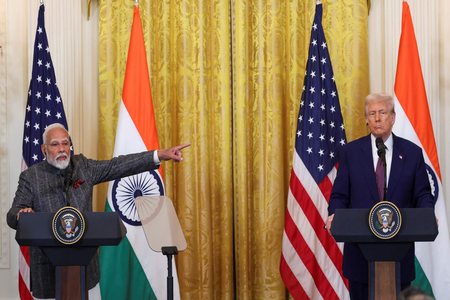
All of this would be understandable... if the Kremlin hadn't smiled broadly at Donald Trump's America this summer. A historic meeting took place in Anchorage, Alaska, with symbolic photos, which, according to many Russian analysts, "allows Putin to approach his most important ally, not as a vassal, but as a world leader speaking face to face with the president of the United States, China's main rival." For this reason too, the failure to mention the United States seems like a deliberate evasion, an awkward topic that is better left aside.
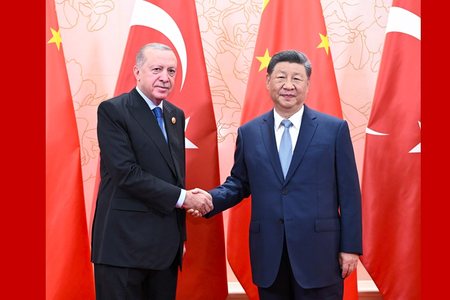
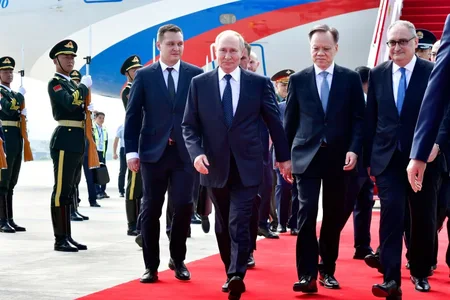
Putin is the chief guest at the Shanghai Cooperation Organization summit taking place from today to September 1 in Tianjin, along with the leaders of India, Iran, Turkey and several other countries that have difficult relations with the White House. A kind of "general assembly" of the Global South, also united by a strong dose of anti-Americanism. After this summit, a military parade is also expected to mark the 80th anniversary of the Chinese victory in World War II. /Adapted from Corriere Della Sera


Lini një Përgjigje