


 Shkruar nga Pamfleti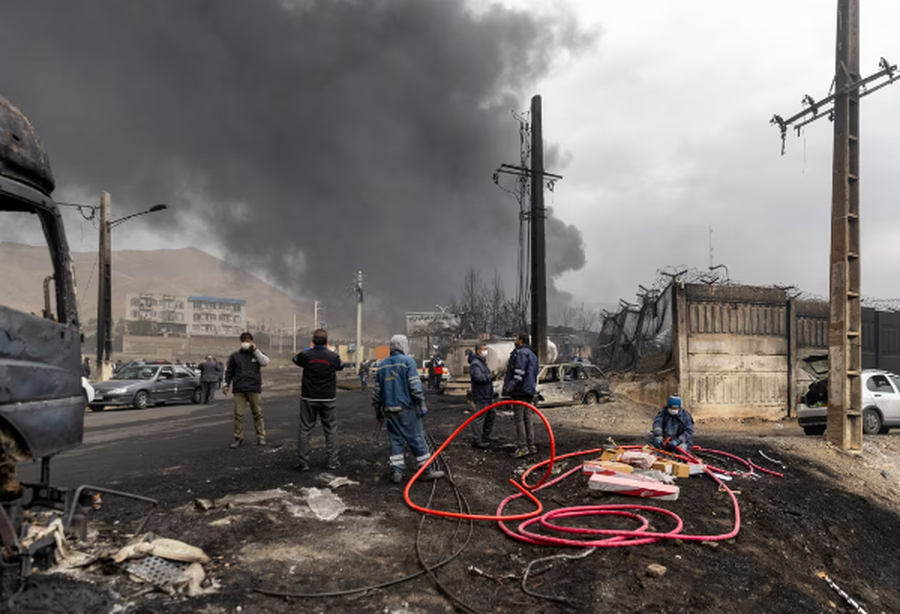
Experts warn that the environmental consequences of the conflict in the Middle East could be catastrophic. As Israel, the US, Iran and regional actors attack military sites, hazardous materials in these places are rarely completely destroyed and could cause further contamination, according to the UK-based Conflict and Environment Observatory (CEOBS).
Potential pollutants left over from these impacts include fuels, oils, heavy metals, and substances released from fires.
When sites containing conventional weapons are hit, the area is contaminated by propellants and explosives, many of which are toxic, says CEOBS.
A booster used for high-explosive munitions is TNT, which can remain in the soil for a long time and damage vegetation. The U.S. Environmental Protection Agency classifies it as a probable human carcinogen. High concentrations are still found at World War I battlefields, CEOBS says.
Damaged missile facilities also pose an environmental risk. CEOBS says Iran uses both solid- and liquid-fueled ballistic missiles, as well as some liquid propellants, which are highly toxic and difficult to dispose of.
Meanwhile, attacks on ships around the Strait of Hormuz could cause oil spills. Sources have said that Iran is placing explosive mines in the Strait of Hormuz, which could be harmful to marine ecosystems.
"Powerful underwater waves from explosions can cause hearing damage, disorientation and even death to whales, dolphins and other marine species, as well as blast damage to reefs and other natural structures," CEOBS director Doug Weir told CNN.
And in the long term, old mines can leak toxic explosives, Weir says. The intense bombing can also have consequences on the ground: small landslides can occur near attack sites in mountainous terrain.






Lini një Përgjigje