


 Shkruar nga Pamfleti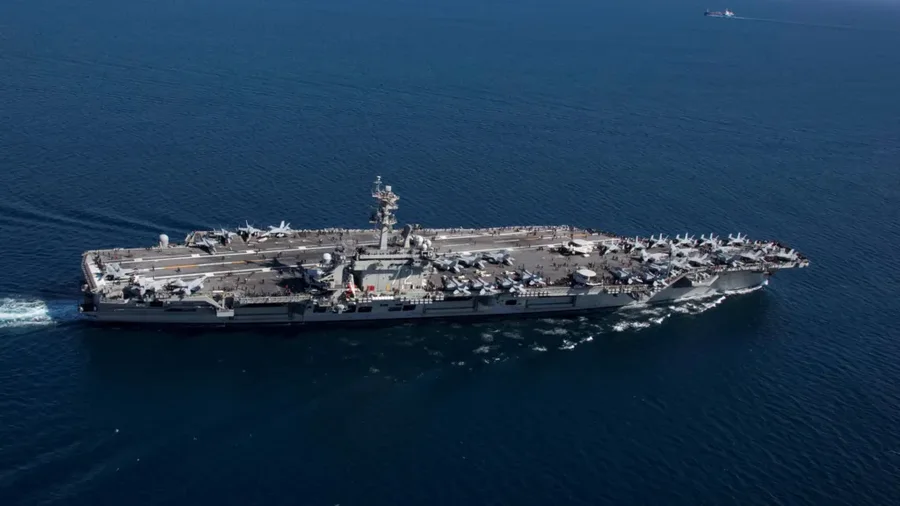
Donald Trump has warned Iran that "time is running out" to negotiate a deal over its nuclear program, following the continued buildup of US military forces in the Persian Gulf.
The US president said a "massive armada" was "moving quickly, with power, enthusiasm and great purpose" towards Iran, referring to a large US naval fleet.
In response, Iran's Foreign Minister Abbas Araghchi said the country's armed forces were ready "with their fingers on the trigger" to respond immediately and forcefully to any aggression from land or sea.
Iran insists its nuclear program is entirely peaceful and has repeatedly denied accusations by the US and its allies that it is trying to develop nuclear weapons.
Trump's latest warning comes after his promise that Washington would intervene to help those involved in the brutal and unprecedented crackdown on protests in the country earlier this month.
The demonstrations began after a sharp drop in the value of the Iranian currency, but quickly evolved into a legitimacy crisis for the country's clerical leadership.
"Help is coming," Trump initially said, before changing his mind and announcing that he had been told that the executions of the demonstrators had been stopped.
The US-based Human Rights Activists News Agency (HRANA) says it has confirmed the killing of more than 6,301 people, including 5,925 protesters, since the unrest began in late December.
HRANA says it is also investigating 17,000 deaths reported despite the internet outage after nearly three weeks.
Another group, the Norway-based Organization for Human Rights in Iran (IHR), has warned that the final death toll could exceed 25,000.
Is the US preparing to attack Iran?
Trump's recent comments on Iran appear to focus more on the country's nuclear program.
"We hope that Iran will soon 'sit down at the table' and negotiate a fair and equitable deal, not nuclear weapons," he wrote on Truth Social.
He said the naval force in the Persian Gulf was larger than the one he sent to Venezuela before US forces captured the country's former leader, Nicolás Maduro.
Trump added that this force was "ready, willing and able to rapidly accomplish its mission, with speed and violence, if necessary."
Duke iu referuar sulmeve të SHBA-së në centralet bërthamore iraniane qershorin e kaluar , të cilat u nisën gjatë luftës 12-ditore të Iranit me Izraelin, presidenti amerikan paralajmëroi: "Sulmi i ardhshëm do të jetë shumë më i keq! Mos e bëni këtë të ndodhë përsëri."
Duke folur para Komitetit të Senatit për Marrëdhëniet me Jashtë të mërkurën, Sekretari i Shtetit Marco Rubio tha se "regjimi iranian është ndoshta më i dobët se kurrë më parë".
"Ata nuk kanë një mënyrë për t'iu përgjigjur ankesave kryesore të protestuesve, që është se ekonomia e tyre është në kolaps", tha Rubio.
Ai shtoi se “ajo që po shihni tani është aftësia për të pozicionuar asete në rajon për t’u mbrojtur nga ajo që mund të jetë një kërcënim iranian kundër personelit tonë.”
Duke iu përgjigjur paralajmërimit të fundit të Trump, Araghchi tha: "Irani gjithmonë ka mirëpritur një marrëveshje bërthamore të dobishme për të dyja palët, të drejtë dhe të barabartë, në kushte të barabarta dhe pa shtrëngim, kërcënime dhe frikësim, e cila siguron të drejtat e Iranit për teknologji bërthamore paqësore dhe garanton asnjë armë bërthamore".
“Armë të tilla nuk kanë vend në llogaritjet tona të sigurisë dhe ne nuk kemi kërkuar kurrë t’i blejmë ato”, shtoi ai.
Zëvendësministri i Jashtëm i Iranit, Kazem Gharibabadi, tha se nuk ka negociata me SHBA-në aktualisht, pavarësisht "shkëmbimeve të mesazheve".
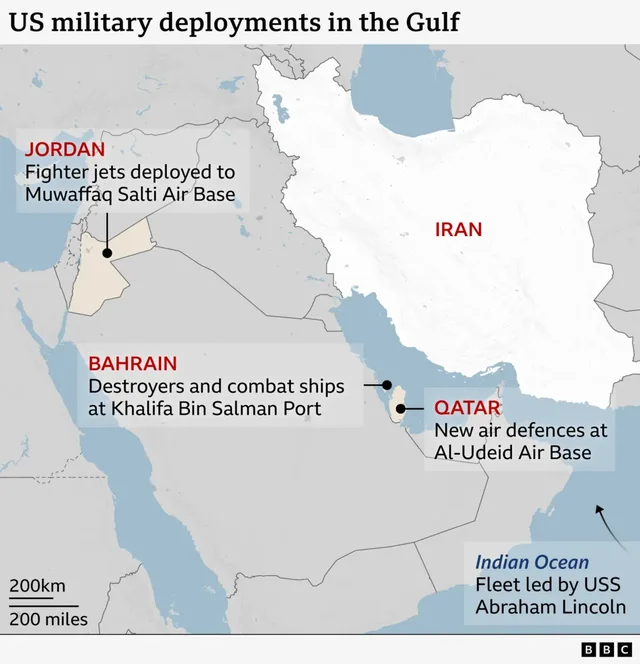
Duke përdorur mjete me burim të hapur, BBC Verify ka qenë në gjendje të gjurmojë disa nga vendosjet e fundit të SHBA-së në rajon, me imazhe satelitore që tregojnë se të paktën 15 avionë luftarakë mbërritën në Bazën Ajrore Muwaffaq të Jordanisë.
Gjithashtu ka pasur një rritje në numrin e avionëve që mbërrijnë në bazat në Jordani, Katar dhe Diego Garcia në Oqeanin Indian.
BBC Verify ka identifikuar dhjetëra aeroplanë mallrash dhe avionë furnizimi me karburant që mbërrijnë në Lindjen e Mesme, ndërsa dronë dhe aeroplanë spiunë P-8 Poseidon janë parë në faqen e gjurmimit FlightRadar24 që veprojnë pranë hapësirës ajrore iraniane.

Një “armadë” detare, siç e quajti Trump, e udhëhequr nga aeroplanmbajtësja USS Abraham Lincoln ka mbërritur gjithashtu në Lindjen e Mesme, konfirmoi një zyrtar i mbrojtjes amerikane për BBC Verify.
Të hënën, një sistem gjurmimi i një avioni Osprey u pa në FlightRadar24 duke u ulur në Oman, pasi u largua nga një vendndodhje në det të hapur në Gjirin Persik, duke sugjeruar që Lincoln mund të jetë duke operuar diku afër.
“Në dy javët e fundit, SHBA-të kanë shtuar numrin e aseteve detare dhe ajrore në rajon, duke rritur ndjeshëm pozicionin e tyre rajonal”, tha Megan Sutcliffe, një analiste kryesore në firmën këshilluese të riskut Sibylline.
Imazhet satelitore tregojnë se të paktën dy shkatërrues amerikanë me raketa të telekomanduara dhe tre anije luftarake janë ankoruar në Bahrein për disa muaj.
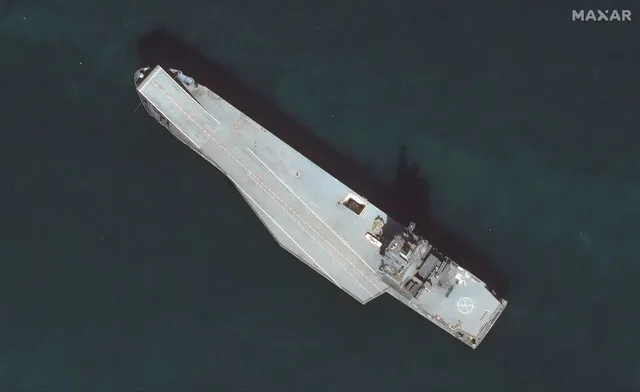
Meanwhile, Tehran has deployed the IRIS Shahid Bagheri, a drone carrier ship that entered service last year, near the Iranian coast, satellite images show.
Under a 2015 nuclear deal with world powers, Iran was not allowed to enrich uranium above 3.67% purity - the level required for fuel for commercial nuclear power plants - and was not allowed to conduct any enrichment at its Fordow plant for 15 years.

However, Trump abandoned the deal during his first term in 2018, saying it did too little to stop a path to a bomb, and reinstated US sanctions, which crippled the Iranian economy.
Tehran retaliated by increasingly violating the agreement's restrictions, particularly those related to the production of enriched uranium, which is used to make fuel for the reactor, but also for nuclear weapons.
US officials, quoted by US media, have said that Iran must stop enriching uranium, limit its missile program and stop supporting proxy groups in the Middle East as part of a new nuclear deal.
The last time the US took action against Iranian nuclear plants was in June of last year, when it targeted three uranium enrichment facilities in Iran: Fordow, Natanz, and Isfahan.
US officials later said the operation, codenamed "Midnight Hammer", had significantly hampered Tehran's prospects of building a nuclear weapon.
However, Hassan Abedini, deputy political director of Iran's state broadcaster, claimed that the country "did not suffer a major blow because the materials had already been extracted" from the facilities.
In retaliation, Iran fired missiles at a US military base in Qatar, an attack described by Trump as "very weak" and "expected." /Adapted from BBC /




Lini një Përgjigje