


 Shkruar nga Pamfleti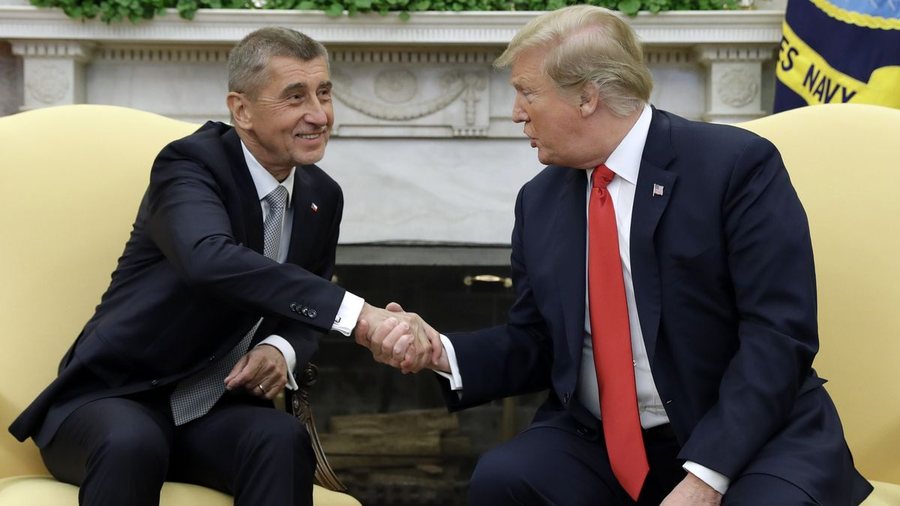
Money, power and propaganda: the anatomy of Andrej Babiš!
In the last parliamentary elections in the Czech Republic, the populist ANO 2011 party of billionaire former Prime Minister Andrej Babiš has come out on top with 97% of the votes counted. According to preliminary results, ANO has received about 35% of the vote, leaving behind the center-right ruling coalition "Together" of outgoing Prime Minister Petr Fiala, which has fallen to 23%. The State Election Commission is expected to confirm the final results on Monday.
In fourth place is the Pirate Party, Fiala's former ally in the government, with 8.6% of the vote and 16 MPs. One of the most prominent elements of these elections is the significant decline of pro-Russian and anti-system parties, which previously demanded a referendum on the Czech Republic's exit from the EU and NATO, the expulsion of Ukrainian refugees and the cessation of any aid to Kiev.
Who is Andrej Babiš?
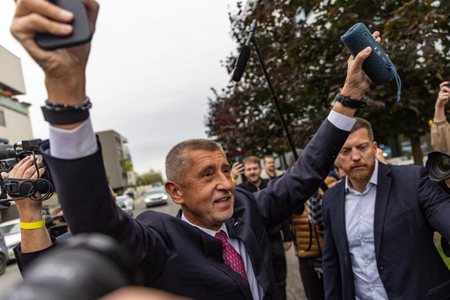
In the campaign, his slogan was clear: “Yes , it will be fine again. ” The 71-year-old Babiš, a former prime minister (2017–2021) and one of the richest people in Central Europe, is a controversial figure. He faces accusations of misuse of EU funds, which he denies, while European allies are concerned about his critical stances towards Brussels and NATO.
On social media, especially TikTok, Babiš has built a new populist profile, appearing in simple clothes, jeans and sneakers, and imitating the style of young influencers. He has even launched a clothing line with the initials “AB”, which supporters buy as a sign of solidarity, while opponents buy as a sign of irony.
In previous elections, he handed out red MAGA-style hats with the inscription “Strong Czechia.” This time, he has positioned himself as a pragmatic Czech populist, who some compare to Donald Trump or Viktor Orbán, but who maintains a more national profile.
From businessman to political leader
Born in Bratislava in 1954, Babiš is the son of a Slovak diplomat. He lived partly in Paris and Geneva, outside the Soviet reality of the time. In 1980 he became a member of the Communist Party of Czechoslovakia, and after its division in 1992, he settled in the Czech Republic.
In the 1990s, he built his economic empire through the Agrofert company, which is today one of the largest private employers in the country, with interests in agriculture, the food industry, chemicals and construction. But his wealth is also a source of controversy.
In 2024, the Czech government asked Agrofert to repay more than 200 million euros in subsidies it received while Babiš was prime minister, citing a conflict of interest. Although he transferred the company into two trusts, courts ruled that he still exercises control over it. Babiš denies any wrongdoing and says he will keep the shares but not manage the company.
Among the most sensitive issues facing him is the "Stork's Nest" case, in which he is suspected of illegally obtaining $2 million in EU funds for a conference center near Prague, temporarily registering it in the names of family members to benefit from the subsidies. He also denies this charge.
Populism, media and foreign policy
Babiš controls several powerful media outlets, two newspapers, a radio station and a music channel, which he used for political purposes during his first term. In foreign policy, he takes a critical stance towards the EU, is against the European Green Deal and the Migration Pact, promising to protect the Czech Republic's "national interests".
Although he has questioned aid to Ukraine and the role of NATO, his associates describe him as "pragmatic and not ideological."
In August, during a visit to Belgrade, Babiš boasted on the X network (formerly Twitter) that Serbian President Aleksandar Vučić had offered him “100 thousand doses of the Pfizer vaccine” during the pandemic, a typical example of his close ties in the Balkans and his balanced foreign policy between East and West.
His victory marks a strong populist turn in Central Europe, placing the Czech Republic in a similar line to Orbán's Hungary and Robert Fico's Slovakia, a Eurosceptic axis that is increasingly strengthening its positions towards Brussels. /Adapted from "Danas"




Lini një Përgjigje