


 Shkruar nga Pamfleti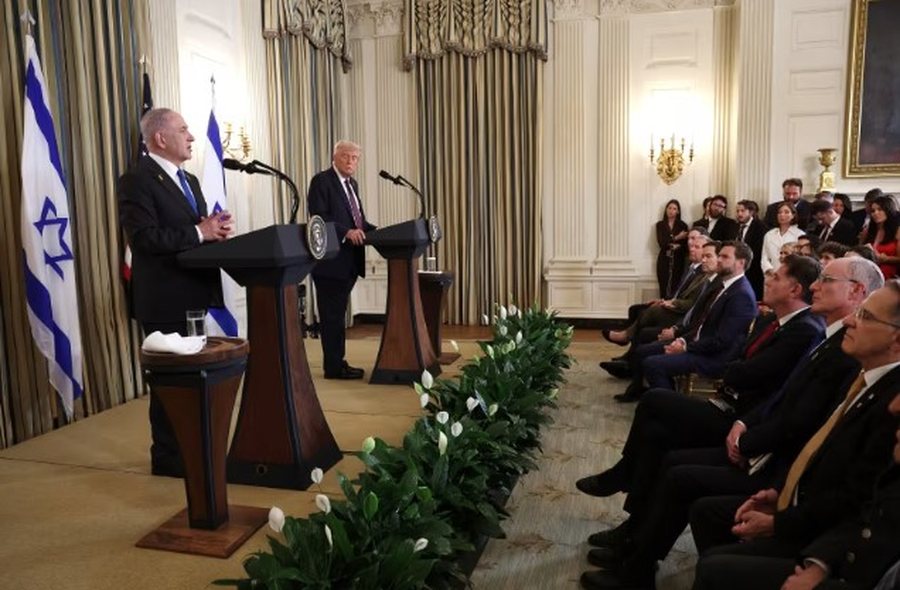
Who stops first? Trump silences Tel Aviv
On Friday afternoon, the White House was informed that Hamas, after nearly five days of silence, had responded to President Donald Trump's 20-point peace plan to end the war in Gaza. American officials reacted with rare speed: they immediately published Hamas's response on social media, even briefly misattributing it to Trump himself.
In its response, Hamas did not fully accept every point of the plan, especially those calling for disarmament and no role for the group in the future governance of Gaza. But Trump chose to focus on what Hamas had agreed to — especially its willingness to release all remaining hostages from the October 7, 2023 attacks. For him, this was the signal he had been waiting for to declare that peace was “close,” even though the details were still unclear.
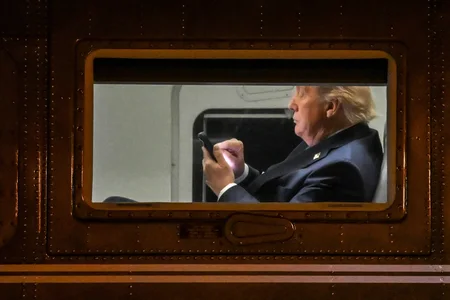
Just an hour after Hamas' response was released, Trump reacted publicly, writing on "Social Truth": "Based on the statement just released by Hamas, I believe they are ready for a lasting peace. Israel must immediately stop bombing Gaza so we can rescue the hostages quickly and safely!"
The message, released without prior coordination with Israel, caught Prime Minister Benjamin Netanyahu by surprise. According to Israeli sources for CNN, Netanyahu was surprised twice: first by Trump's immediate acceptance of Hamas' response, and then by the direct order to stop the bombing. As a result, Israel was forced to suspend the offensive on Gaza City, even though it planned to continue negotiations under fire.
On Saturday morning, Netanyahu's office issued a cautious statement: "Israel is ready to immediately implement the first phase of President Trump's plan for the release of all hostages." He added that he would continue cooperation with the US administration "in accordance with the principles of President Trump's vision."
In a video released that evening, Trump called it “a great day” and said it was “historic in many ways.” He added that “everyone is united in wanting to end this war and see peace in the Middle East.”
It is not known whether there was a direct phone call between Trump and Netanyahu, but the lack of coordination was clear. In his speech, Trump thanked Qatar, Turkey, Saudi Arabia, Egypt and Jordan for their mediating role – but did not mention Israel at all.
This was the first time Trump openly and publicly called on Israel to immediately stop the bombing of Gaza. With this statement, he effectively shifted the responsibility for stopping the war onto Tel Aviv.
Meanwhile, Trump's emissaries, Steve Witkoff and Jared Kushner, travel to Egypt to negotiate the details of the hostage release and the technical aspects of the peace plan.
However, the reaction in Washington was not unanimous. Even some of Trump's most loyal allies, such as Senator Lindsey Graham, called Hamas's response "a 'yes', but with conditions" - noting that the group does not accept disarmament and wants to maintain control over Gaza. "Essentially, this is a rejection of President Trump's 'take it or leave it' plan," Graham wrote.
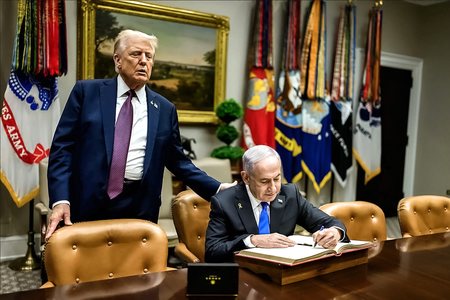
But Trump preferred to see progress, not setbacks. "We'll see how it ends. Now we have to define the agreement clearly and in writing," he said in a video message from the Oval Office.
US sources said Hamas's delayed communication was due to problems between its leaders in Gaza and its external branches, as well as divisions within the movement's structure. But Trump, impatient, issued a warning on Sunday: accept the plan or "all hell will break loose in Gaza."
Instead of using Hamas' response to justify a new Israeli offensive – as he had previously warned – Trump chose to do the opposite: to cease fire. This move put Netanyahu in a difficult position, between the obligation to maintain the alliance with the US and domestic pressure to continue the war.
Relations between the two have deteriorated since Trump returned to office in January, with tense phone calls about prolonging the war and expanding it beyond Gaza's borders - a strategy that, according to some advisers, is hurting Trump's chances of winning the Nobel Peace Prize.
Meanwhile, parts of his political base in the US have also moved away from pro-Israeli stances, calling the Gaza offensive "genocide", as Republican Rep. Marjorie Taylor Greene has done.
The latest blow to Trump was the Israeli bombing of Qatar last month, which killed several Hamas leaders. According to Washington, the attack damaged diplomatic efforts for peace and forced the Trump team to draft the multi-point plan that now forms the basis of the agreement.
This plan, built with the help of Jared Kushner and included in recent discussions in New York with Netanyahu, aims to end one of the bloodiest conflicts of the decade - even if the peace it offers remains fragile. /Adapted from "Pamphlet" by "CNN"



Te mos harrojme se Trump eshte Gjerman-Skotish gjak. Te mos harrojme se USA ka 40% Gjermane ne popullaten e vet. Ndoshta USA ka cifutet bankire ne krye por forcen njerezore nuk ka flori, diamante e para ta nenshtroje. Gjaku nuk behet uje themi ne Shqiptaret ndersa Anglo-Saksonet thone, gjaku eshte me i trashe se uji, njelloj si ne. Ne Shqiptaret maloke e maloket e tjere Anglo-Saksone e Gjermanike kur te ftojne ne ftese vene Zoti fila e zonja filane ndersa kurvat e Frances se shkerdhqyteteruar e bejne ftesen Zonja filane e zoti filan. Ne e marrim nusen ne shtepi e sllavet, greket e bakalarot marrin dhenderrin ne shtepi. Ka ardhur koha qe popujt e kordhes e shqytit te marrin ne dore frenat e botes se shkaterruar nga imoraliteti universal.