


 Shkruar nga Pamfleti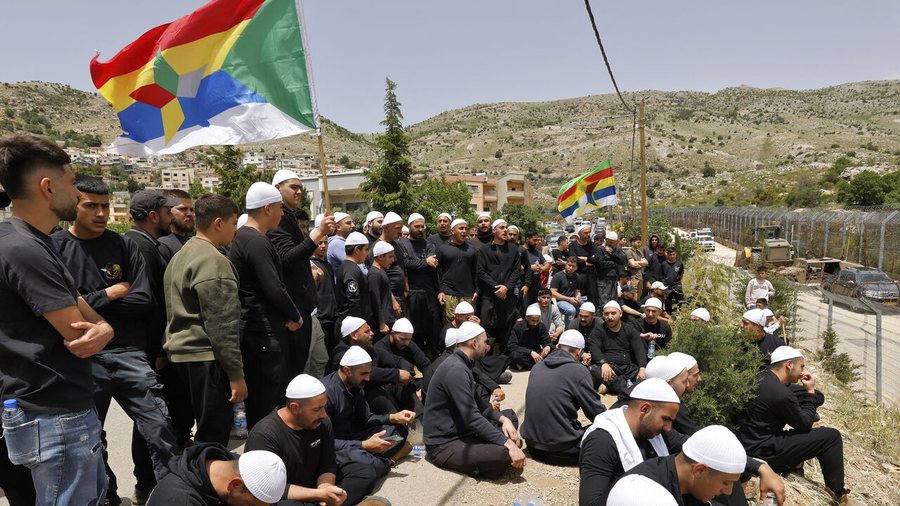
The Druze do not identify as Muslims, but speak Arabic as an integral part of their culture and identity, and believe in reincarnation and the immortality of the soul.
The dramatic chronicles of recent days bring the issue of the Druze minority in Syria back into the spotlight, as it struggles to rebuild a fragile internal unity after the brutal overthrow, eight months ago, of the dictatorship of Bashar al-Assad.
For the moment, a fragile ceasefire seems to be in place in the southern area around the Druze city of Sweida; however, this morning Israeli aircraft returned to bombing, this time hitting the coastal region near Latakia, following yesterday’s attacks that hit the heart of Damascus: near the Ministry of Defense and the presidential palace. For the first time since taking office as interim president, Ahmad al-Sharaa openly criticized Israel, accusing it of “destabilizing” aims against his country.
Who are the Druze and how do they fit into the mosaic of the Middle East?
The Druze are monotheistic believers, involved in the Abrahamic tradition, but do not self-identify as Muslims. Arabs, language and culture are integral parts of their identity. They maintain rituals closed to outsiders, believe in reincarnation and the immortality of the soul. These features make them unique in the regional context, but also the subject of constant persecution and discrimination. Today, the Druze population is estimated at between 800,000 and 1 million people: about half live in Syria, 35–40% in Lebanon and 10% in Israel. To survive historically, they have preferred a closed community, but strive for pragmatic agreements with the central authorities.
The fall of the Assad regime in December 2024 was preceded by harsh repressions that determined the strategies of the groups in power. For almost seven months, al-Sharaa has aimed to restore central authority, to destroy armed factions, especially Alawites, Druze and Kurds in the north. But the offensive has been accompanied by brutal battles: in April, about 1,700 Alawites were massacred along the Latakia-Tartus coast, while over 100 Druze have lost their lives in the Damascus region.
The historical origin of the Druze
As a religiously separate group from Islam, the Druze were formed in the 11th century, during the Fatimid Caliphate in Cairo, at the time of al-Hakim bi-Amr Allah. The faithful considered him a divine figure, a document hostile to them until his death in 1021, which forced them to relocate to the mountains of Syria, Lebanon, Hermon, Galilee and the Golan, probably for some time in areas of isolation.
In the 12th century, the Jewish traveler Benjamin of Tudela described the Druze as “settled in the mountains, protected by armed and courageous warriors.” During the 16th century, they expanded their presence eastward, as far as Aleppo and the borders of Iraq.
In the 19th century, they faced the Maronites in Lebanon, and although France intervened militarily, the Druze maintained their autonomy. In 1925, under the leadership of Sultan al-Atrash, they organized a revolt against French colonialism in Syria, aiming to create a Druze state; the revolt failed, but it created a tradition of selective participation in relations with power.
Today's conflict: the Druze among rival forces
Israel's choice to support the Druze despite this crosses a delicate line: on the one hand, the Netanyahu government presents this as support for the persecuted minority; on the other, the desire to "normalize" relations with Damascus clashes with fears of Syrian chaos that could jeopardize border peace.
Saudi Arabia, Turkey and the United States have brokered this tenuous ceasefire. President Trump met with al-Sharaan in Saudi Arabia in May, lifted some sanctions on Syria and urged Netanyahu to make a peace deal; so did Turkish President Erdogan, alarming Israel, which is now trying to balance cooperation with the Kurds with anyone else who might influence Ankara and Damascus.
Current situation:
The ceasefire is still fragile. Fears of new massacres remain present, as Israeli bombings, attacks on Syrian positions and sectarian tensions continue in Syria. In this scene, the Druze try to maintain a position that is almost neutral, but ready to be supported by future Allies. /Adapted from “Pamphlet” by “Corriere Della Sera”.







Lini një Përgjigje