


 Shkruar nga Pamfleti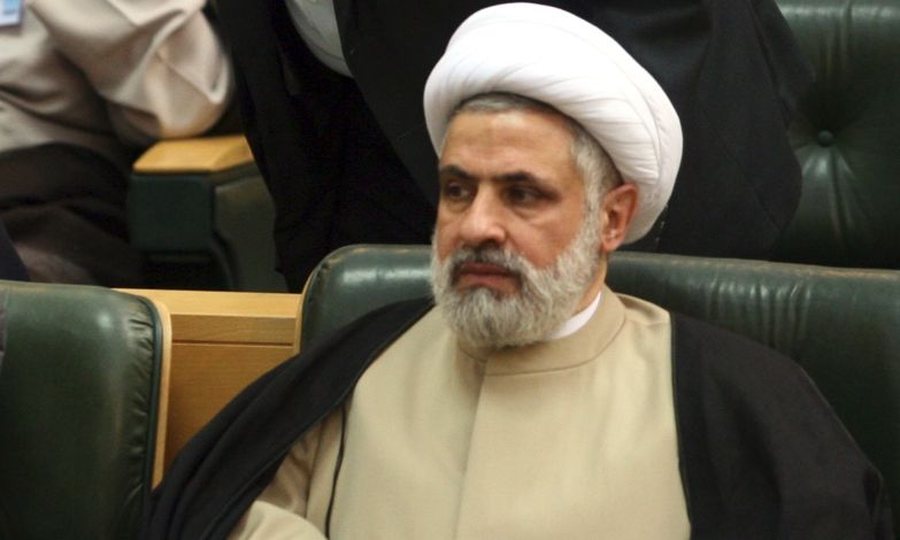
An Israeli overnight strike on Hezbollah has killed Ali Yusuf Harshi, considered the closest associate of the organization's leader, Naim Qassem. Meanwhile, the latter's fate remains a mystery, amid Israeli reports that he may have been eliminated, but which have not been confirmed by Hezbollah.
The Israel Defense Forces announced on X that "Na'im Qassem, the head of the terrorist organization Hezbollah, in Beirut, has been eliminated. A number of terrorist infrastructures were attacked last night in southern Lebanon. The Israel Defense Forces struck and neutralized Ali Yusuf Harshi, personal secretary of the terrorist organization Hezbollah and nephew of Na'im Qassem, yesterday in the Beirut area."
צה"ל חיסל ביירות את מצק"ל חיסל ביירות את מצק"ל של מזכ"ל ארגון התורור חיזבאלה Naim Qasim: שורת תשטיות תרור הותקפו הילן בדרומ לבאונן צע"ל
— Israel Defense Forces (@idfonline) April 9, 2026
תעקפ וישל את אלי יוסף הרשי, מזכ"ל ארגון הטורור חיזבלאלה, ואחינו של נאים קאסים במרחות בירות.
חראשי היה מקורוב ויועצ ישישי למזכ"ל חיזבאלה נאים…
Harshi was a close associate and personal advisor to Hezbollah Secretary General Naim Qassem, and played a central role in managing his office and providing his security. Overnight, the Israel Defense Forces struck two key crossings used by Hezbollah terrorists to move from the northern to the southern Litani River in Lebanon, transporting thousands of weapons, rockets, and launchers. In addition, approximately 10 weapons storage facilities, launchers, and headquarters used by Hezbollah in southern Lebanon were attacked.
Hezbollah attacked Israel after the death of Iran's supreme leader, Ali Khamenei, on the first day of the war. Israel has vowed to respond forcefully and has since carried out airstrikes that have killed more than 1,000 people. Israel had already weakened the group's military capabilities and had hit it with a series of assassinations since the start of the Gaza war on October 7, 2023.
Despite a US-backed ceasefire between Israel and Lebanon in 2024, after more than a year of fighting, Israel has carried out regular strikes against what it has identified as Hezbollah targets in Lebanon. It accuses the group of seeking to rearm.
Hezbollah refused to disarm under a US proposal aimed at extending the ceasefire. Qassem immediately threatened Israel, saying missiles would fall on it if it again started a full-scale war in Lebanon. In 2024, Israel killed Qassem's predecessor, Hassan Nasrallah, in an airstrike in a suburb of Beirut, which was the culmination of a conflict that began when Hezbollah opened fire on Israeli positions on the border, supporting the Palestinian Hamas.
Hezbollah named Qassem, who had been a senior figure in the organization for more than 30 years, as its new leader a month after Nasrallah's assassination. The group was formed in 1982 by Shiite Muslim fighters in Lebanon and was backed by Iran's Revolutionary Guard to fight the then-Israeli occupation of southern Lebanon.
Naim Qassem was born in 1953 in Kfar Kila in southern Lebanon. He was one of the first members of Hezbollah and played a major role in shaping its ideology. He was part of a group of influential figures, including Abbas al Mousaoui, Subhi al Tufaili, Mohammad Yazbek, Ibrahim Amin al Sayyed, and Hassan Nasrallah, who helped found Hezbollah.
Qassem began his political journey in the 1970s with Imam Musa al-Sadr's Amal Movement and was also involved in the founding of the Movement of the Neglected. He completed a degree in Chemistry from the Lebanese University, while also pursuing religious studies under Ayatollah Mohammad Hussein Fadlallah.



Lini një Përgjigje