


 Shkruar nga Pamfleti
With his indirect criticism of the American president, Leo XIV joins a thousand-year tradition of confrontations between the Holy See and major political figures.
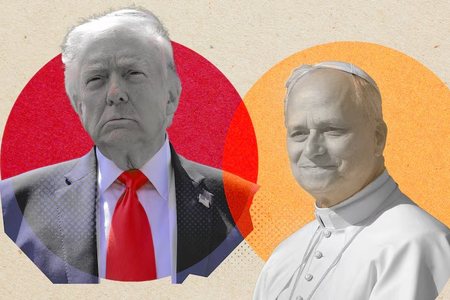
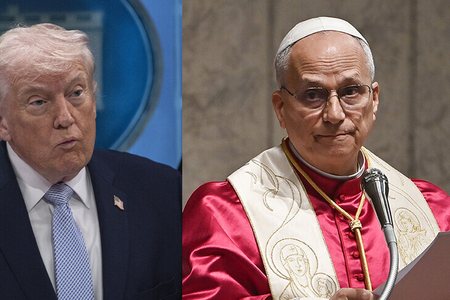
US President Donald Trump is not the first and likely will not be the last. The growing clash between the US president and Pope Leo XIV is just the latest episode in a tradition stretching back thousands of years in which world leaders have clashed with the head of the Catholic Church.
The war in Iran joins the fall of the Roman Empire and the French Revolution as historical moments that have caused tensions between popes and some of history's most prominent political figures.
The latest clash stems from the conflict in the Middle East and the pope's repeated calls for peace. Leo XIV angered the president by declaring that God "does not hear the prayers of those who make war" and calling Trump's threat to destroy "an entire civilization" "unacceptable."
Trump responded by saying the pope is "weak on crime and bad on foreign policy," while representatives of his administration insisted that the conflict in the Middle East is a "just war" fought "in the name of Jesus Christ."
This clash may raise questions, but it is nothing new for the Catholic Church. Leo XIV seems to follow a long tradition of popes who have faced chancellors, prime ministers, kings, emperors, and even barbarian invaders.
Leo the First
The first Pope named Leo (440–461) faced a figure considered harsher than many modern leaders: Attila the Hun.
After plundering across Europe, Attila entered Italy and destroyed cities in the north of the peninsula. Rome, under the nominal control of the weak emperor Valentinian III, seemed destined to fall. In 452, Leo was sent to stop him.
Without an army to confront the barbarians, the pope chose dialogue and a warning of divine retribution. According to the Greek historian Priscus, Attila was so moved by the meeting that he ordered a retreat to Germany, where he died less than a year later.
Confrontation with Napoleon
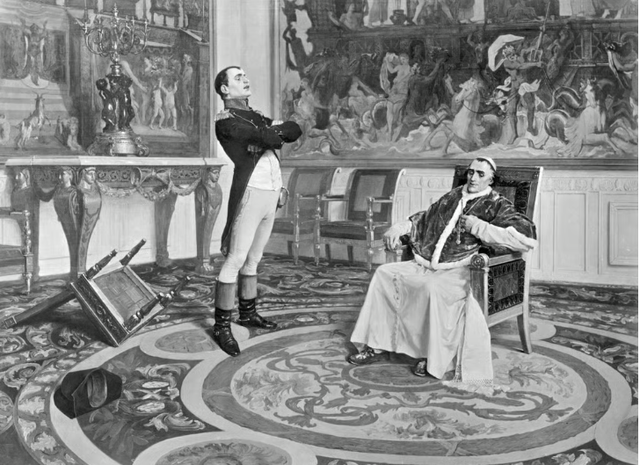
French Emperor Napoleon Bonaparte had a tense relationship with the leadership of the Catholic Church.
As a general, he invaded Italy, defeated the forces defending the Papal States, and proclaimed the Roman Republic. When Pope Pius VI opposed this move, he was arrested and deported to the French city of Valence, where he died a few months later.
His successor, Pius VII, chose a more pragmatic approach. He negotiated a treaty of peaceful coexistence with the French Republic and traveled to Paris to attend Napoleon's coronation as emperor, avoiding direct confrontation.
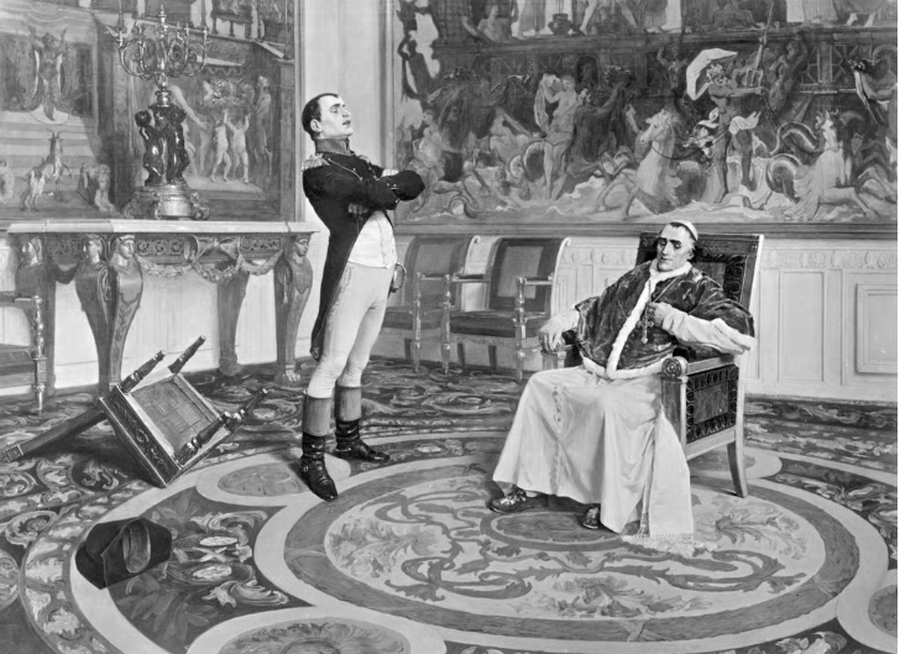
However, relations deteriorated when the pope refused to support the continental embargo against Britain. He too was imprisoned, but as a younger man he managed to wait out Napoleon's downfall in 1815. After this, he returned triumphantly to Rome and was welcomed as a living martyr who had stood up to the emperor.
Cautious diplomacy
Pope Pius XII (1939–1958) operated in a period of great global influence and remains a figure with a controversial legacy.
Before his election, he negotiated the 1933 agreement between the Vatican and Germany, which gave legitimacy to Adolf Hitler's regime and required the clergy to maintain silence as the Nazis launched persecutions.
As pope, he was criticized for his lack of strong public denunciations of Nazi crimes. Supporters argue that he chose a restrained approach to conducting secret diplomacy that saved thousands of lives. He appointed Jewish academics to Vatican posts, brokered the admission of refugees to Brazil, and sheltered thousands of people in monasteries and convents in Rome.
After his death, Israel's Foreign Minister at the time, Golda Meir, described him as a “servant of peace” who “raised his voice against the persecutors and expressed compassion for the victims.” However, his strategy remains a subject of debate.
Towards the East
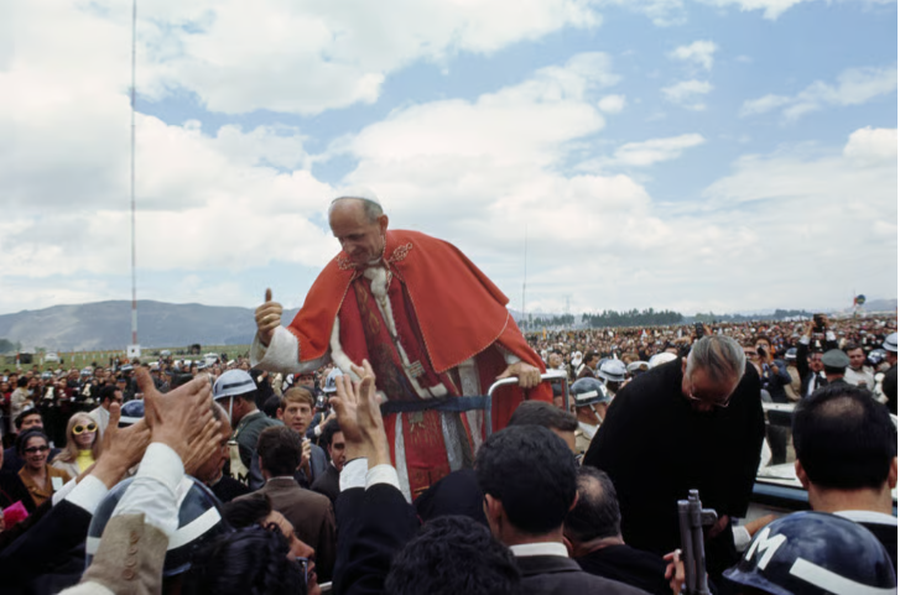
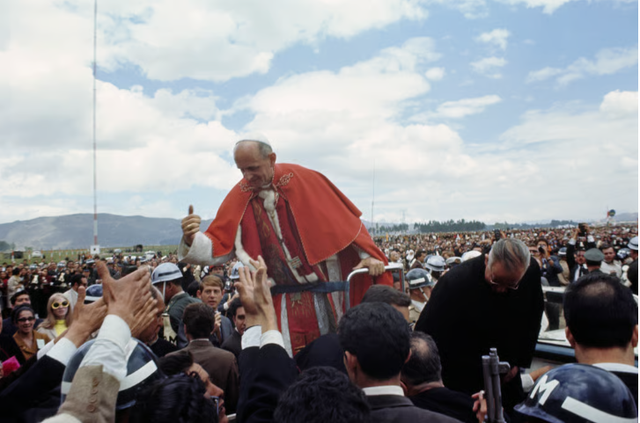
After the Cuban Missile Crisis, Pope Paul VI (1963–1978) embraced a policy of dialogue with Eastern Bloc countries, known as Ostpolitik.
He hosted Soviet leaders at the Vatican and sent representatives to Poland, Hungary, and Romania to build relations with communist authorities. Although this strategy was opposed within the Church, it improved conditions for believers in countries behind the Iron Curtain.
This line was continued by Pope John Paul II, who built relationships with Soviet leader Mikhail Gorbachev and at the same time morally supported the "Solidarity" movement in Poland.
These efforts reaffirmed the global importance of the Catholic Church, even in countries that officially promoted atheism.
"Don't build the wall"
During Donald Trump's first term, Pope Francis (2013–2025) chose to criticize policies without directly attacking the president.
Before his 2017 inauguration, he declared that “a person who only thinks about building walls … is not a Christian.” His spokesman later clarified that this was a general observation and not a direct reference to Trump.
The same approach was followed throughout his papacy. Francis took strong positions on issues like climate change, particularly when the US withdrew from the Paris Agreement, but avoided a personal clash with the president.
A well-known photo from their meeting at the Vatican illustrates this approach: Trump appears smiling, while the pope remains serious, reflecting a cautious diplomatic relationship in the service of maintaining international peace. /Adapted from Politico /


Lini një Përgjigje