


 Shkruar nga Nicola Imfeld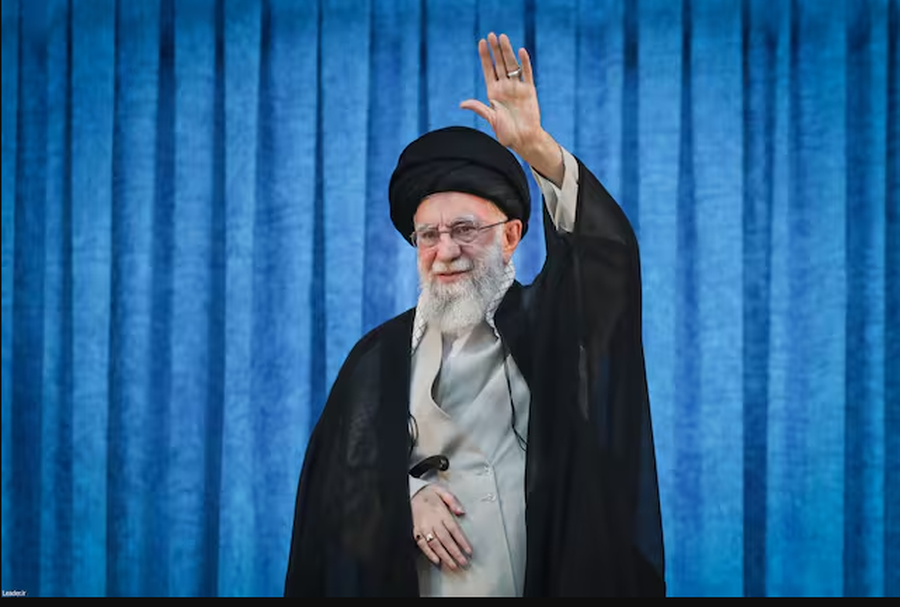
Iran's Supreme Leader, Ali Khamenei, is currently fighting to maintain his power. To do so, he needs money. This money comes from a mysterious organization called Setad, which was originally founded to support the needy...
The war between Israel and Iran continues to escalate. US President Donald Trump on Tuesday demanded Iran's "unconditional surrender." Iranian revolutionary leader Ayatollah Ali Khamenei refused to accept this on Wednesday and issued a direct threat to the US.
The extent to which Khamenei still holds the reins has been the subject of recent speculation. However, over the past few decades, he has held on to power in the Islamic Republic, with harsh rhetoric and repression. And with a lot of money. In the shadow of the public eye, Iran’s supreme leader has built a vast network of real estate, corporate holdings and economic power. According to recent US estimates, Khamenei is said to have amassed as much as $200 billion.
Much of what is known about Khamenei's sources of money remains obscure, but the mysterious Setad organization plays a central role.
Setad was the financial impetus for Iran’s supreme leader to come to power. His predecessor, revolutionary leader Ruhollah Khomeini (1902–1989), ordered the organization’s establishment a few months before his death, a sort of collection point for abandoned properties left behind after the 1979 revolution. Its original purpose was supposed to be a good one: selling properties to support war invalids and the poor.
But instead of disbanding Setad after two years as planned, Khamenei took over the organization and transformed it into the economic heart of his power grab. The once charitable institution was transformed into a multi-billion dollar machine. Reuters tracked the Setad system in an investigative report in 2013.
The mullahs' regime systematically confiscated thousands of properties across Iran. The targets were opposition figures, religious minorities, and even Iranian exiles. In some cases, Setad even allegedly demanded money to release the confiscated homes.
Reuters uncovered several examples of Iranians who were initially expropriated, only to be forced to negotiate the price to get their property back. This practice was protected by the courts, which, according to the research, always acted in Khamenei's interests.
Starting in the 2000s, Setad transformed from a pure real estate asset management company into a shadowy business conglomerate, with stakes in banks, insurance companies, telecommunications companies, energy, pharmaceutical and construction corporations, and even a contraceptive manufacturer and an ostrich farm.
The US responded in 2013 under Barack Obama with sanctions against the entity and 37 of its subsidiaries. "Setad is hiding billions in assets for the benefit of the Iranian elite," the US Treasury Department explained the decision.
What about Khamenei himself? He officially lives a modest life, wears simple clothes and publicly avoids luxury. There is also no evidence that he personally diverts funds from Setad.
But the billions flow directly into politics - to finance his ideology. Until today, Setad has been disguised as a charitable foundation in Iran. For Khamenei, it was the perfect tool to expand his power. It is not impossible that his empire will collapse during the conflict with Israel. / Adapted from Blick Pamphlet/








Lini një Përgjigje