


 Shkruar nga Pamfleti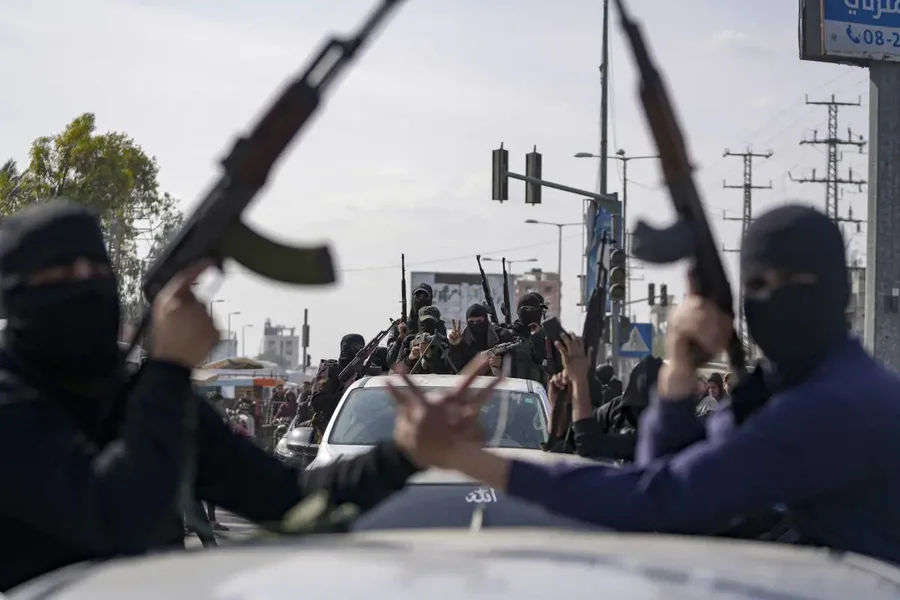
The exiled leadership is open to dialogue, but the commanders who remain in Gaza refuse any concessions. Internal clashes, an economic crisis and pressure from Washington and Doha are putting the Islamist movement in crisis….
One of Hamas' most prominent leaders, Khalil al-Hayya, will lead negotiations to end the war in Gaza.
The delegation will arrive in Cairo today before departing for Sharm el-Sheikh for talks tomorrow.
Discussions will begin to set the conditions for the hostages' release within a few days, with the help of the Red Cross. But something is cracking within the organization.
As Guido Olimpio reports in Corriere della Sera, Hamas continues to present itself as a three-headed organization, but increasingly internally divided.
The first component is the diaspora, with its historical leaders based between Doha and Beirut; the second is led by the military and political leader Izzedine al Haddad, who remained in Gaza; the third is made up of a new generation of cadres who have replaced the deposed commanders and who today appear more radical and hostile to any concessions.
According to analyses recently published by several international observers, these "young" commanders constitute the most irreconcilable faction, opposing any compromise with Israel and wary of US mediation plans.
Their influence has grown in parallel with the weakening of the chain of command, fragmented by Israeli bombing and the loss of many of the leaders of the Ezzedine al-Qassam Brigades.
At the political level, Hamas has officially expressed its agreement in principle to the peace plan proposed by the United States, which calls for the release of all hostages and the gradual demilitarization of the Gaza Strip in exchange for reconstruction and security guarantees.
Washington has asked Israel to suspend military operations as a preliminary gesture, while the Israeli government has agreed to withdraw to an "agreed security line" only after the deal is officially confirmed.
However, behind these diplomatic steps lie deep divisions. Leaders in exile appear more open to negotiations, but complain of difficulties in communicating with Gaza and problems in finding the bodies of dead hostages.
However, within the Gaza Strip, commanders on the ground continue to oppose any cessation of the conflict, convinced that a halt would be tantamount to surrender.
The tensions are also reflected on the ground. In recent days, clashes have occurred between Hamas and several local clans indirectly supported by Israel, particularly the Al-Majaida community in the Khan Yunis area.
The movement's forces attempted to launch an incursion against a militia led by Hussam al-Astal, a former Palestinian security official now armed and financed by Tel Aviv. The incident shows how the Islamist group's authority is threatened by local autonomous authorities and growing civil unrest.
At the same time, anti-Hamas protests are multiplying in the Strip, with spontaneous demonstrations against the war, the economic crisis and the authoritarian management of the territory. Israeli attacks targeting the external leadership - such as the one in Doha in September, which targeted the homes of several Hamas members - have also contributed to destabilizing the leadership and creating power vacuums.
In this context, the position of figures such as Khalil al-Hayya and Khaled Meshal remains uncertain. The former, who survived an Israeli raid and is currently engaged in talks in Cairo, is said to have expressed support for the American proposal, but has conditioned it on further guarantees. Al-Haddad, from his headquarters in Gaza, supports the position, but must convince the more radical militants, determined to continue the armed struggle.
Thus, the internal balance of Hamas seems increasingly fragile. On the one hand, there are those who see the American plan as a possible way out of the humanitarian catastrophe; on the other, the military wing interprets any concession as a betrayal.
The movement's future - and the possibility of a lasting ceasefire - will depend on its leadership's ability to overcome these divisions and present itself united in the ongoing negotiations between Egypt, Qatar and the United States. /Adapted from Il Giornale/




Lini një Përgjigje