


 Shkruar nga Pamfleti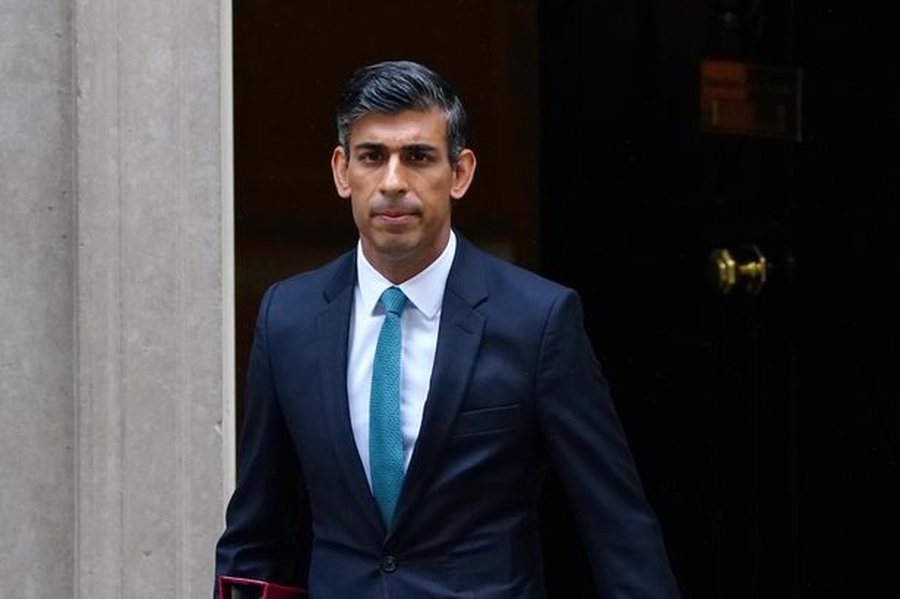
If Labor wins the election with an outright majority, Starmer will move quickly to announce a new ministerial team, with a number of significant challenges to face almost immediately, including hosting a major European summit at Blenheim Palace on July 18.
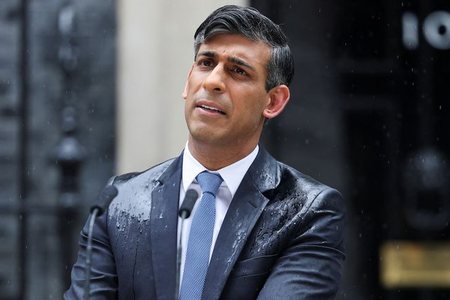
UK Prime Minister Rishi Sunak has called a general election on July 4, announcing a six-week campaign that could see his Conservative party lose power after 14 years.
Why did Sunak call the general election now?
The UK is beginning to emerge from the "cost of living crisis" that saw prices of essential goods rise sharply when Russia invaded Ukraine two years ago. Sunak's message to the country is that the economy is on the right track and only his party can provide stability. Many analysts expected the election to be held in the autumn, perhaps in October or November, but Sunak seems to believe that the prospects for his party are unlikely to improve from now on, and perhaps he hopes that the element of surprise will allow him to " to steal the sprint" from the opposition Labor party, led by Keir Starmer.
What happens next?
Sunak has been given permission by the king to "dissolve parliament", a right officially held by the British monarch, although in reality it is a decision of the prime minister. After May 30, the current parliament will formally cease to exist and MPs will become candidates, who will have to convince voters to be re-elected. The ministers will continue to perform their duties until the formation of the new government.
Is Sunak likely to lose?
Of course, if the polls are correct: Keir Starmer's Labor Party has held a significant lead over the Tories for months, and most pundits expect a relatively comfortable victory for Labour. Sometimes, however, campaigns can change the outcome, as in 2017, when Conservative Prime Minister Theresa May called an election while leading in the polls but lost after a disastrous campaign. She then had to govern in partnership with the Democratic Unionist Party of Northern Ireland (DUP).
What are the main issues?
Both parties claim to be able to deliver economic stability, although Labor talks about the chaotic tenure of Sunak's predecessor, Liz Truss, during which mortgage rates soared and left voters questioning whether the Tories should still be in power. . Labour, whose main slogan is "Change", will also focus on the state of public services, particularly the National Health Service, where waiting lists have grown significantly.
Both sides will claim to be tough on illegal immigration. Sunak has repeatedly promised to "stop the boats", but Labor argues that his plan to send people coming to the UK illegally to Rwanda is costly and impractical.
How are other political parties expected to fare?
The Liberal Democrats, led by Ed Davey, who was a minister in the 2010-2015 ruling government alongside the Tories, hope to challenge Sunak's party in a string of seats in the UK's south. The Green Party, which has just one MP in Westminster, is hoping to win another seat, in the city of Bristol, in addition to the one in Brighton, after performing well in the last local elections.
The Scottish National Party, which campaigns for Scottish independence, is now the third largest, with 43 MPs. But after a turbulent period that recently saw its leader Humza Yusuf resign as Scotland's first minister, Labor has high hopes of winning seats in Scotland.
What happens on voting day?
Polling stations open at 7am and close at 10pm on polling day, with most voters attending in person to mark their preference with a pencil and place the paper in a plastic ballot box. At the end of the voting, an exit poll is published, which tends to correctly predict the result. Results from each constituency begin to come in throughout the night as local officials count stacks of ballots. By morning, there are clear signs of who is the winner.
What happens next?
If Labor wins the election with an outright majority, Starmer will move quickly to announce a new ministerial team, with a number of significant challenges to face almost immediately, including hosting a major European summit at Blenheim Palace on July 18.
Will Sunak remain an MP if he loses the election?
He says yes. Asked last week, the Prime Minister said he loved his home in the Yorkshire constituency of Richmond where he has built an indoor swimming pool - and would stay to represent his constituents. But many in Westminster expect that, like David Cameron, who promised to stay after the Brexit referendum and quickly resigned when he lost, Sunak would leave parliament if he lost on July 4. Sunak and his wife, Akshata Murty, own a property in California, where they met, and he has previously spoken warmly of the US entrepreneurial culture. / Adapted from 'The Guardian'



Lini një Përgjigje