


 Shkruar nga Pamfleti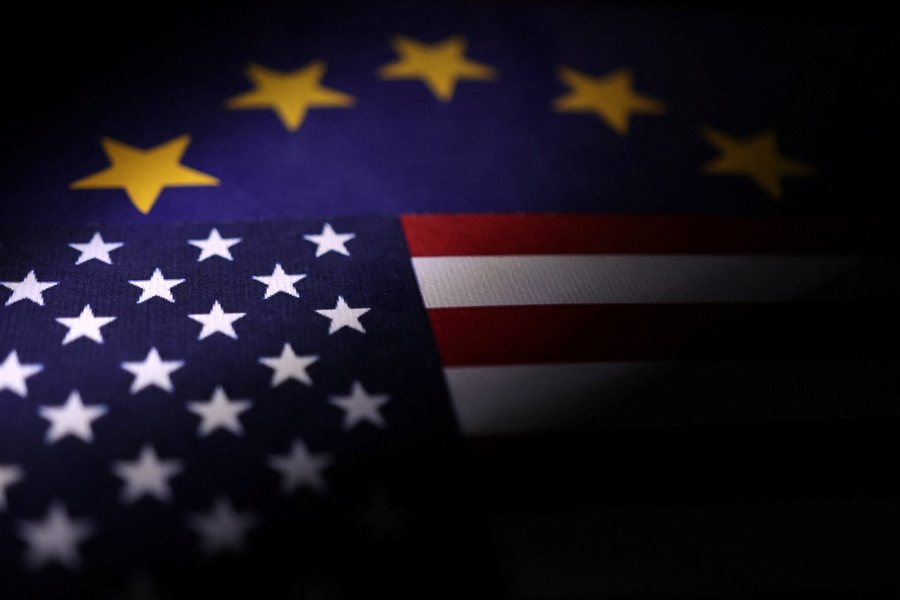
The rules-based international order has not collapsed today, but it has been disintegrating for more than a decade. Mario Draghi’s call for Europe to “wake up” comes at a time when the clash between great powers, competition for energy resources and geopolitical fragmentation have become structural. From the 2008 financial crisis to the US-China rivalry, from energy to security, Europe faces the risk of dependence and loss of strategic weight.
What are the forces shaping global politics? What for decades was called the “rules-based international order” seems to be unraveling. But do we risk, in saying this, constructing an imaginary past that never really existed, distorted by our nostalgia?
Today, Mario Draghi is calling on Europeans to wake up from their apathy, to acknowledge that a world order they were accustomed to has collapsed. This is no time for nostalgia: according to Draghi, it is time to think about building a new order. The diagnosis is correct, but the “death certificate” of this order must be dated earlier.
There is a widespread tendency to attribute this historical turning point – the end of an era – to the figure of Donald Trump, who undoubtedly fits the role (and would probably even be happy with it). But many serious historical analyses place the crisis of the global order at the beginning of the 21st century.
Some scholars see 2008 as the final tipping point. It's a story Draghi knows all too well: he was at the helm of the European Central Bank when the world faced the Great Financial Crisis, with banking collapses that turned into a global recession and then a eurozone crisis.
The year 2008 also marked a significant deterioration in US-China relations. The Chinese leadership began to adopt a more openly hostile stance, declaring that the era of American leadership was over. However, there are also authoritative analyses that place the crisis of the international order before 2008.
This is the thesis of Professor Helen Thompson, author of the book “Disorder: Hard Times in the 21st Century.” Thompson, a professor of political economy at the University of Cambridge, warns that the world was chaotic long before Trump entered the White House in 2016.
In her analysis, she chooses 2005 as a key moment. By then, according to Thompson, many of the problems that have become structural today were apparent: deep divisions within NATO over the war in Iraq, with France and Germany effectively siding with Russia; bipartisan pressure in the US Senate for a more confrontational trade policy towards China; and energy tensions that were taking shape.
In 2005, global oil production stagnated at a time when Asian, especially Chinese, demand was growing rapidly. In Europe, this was reflected in Germany's decision to build the first Nord Stream gas pipeline, bypassing Ukraine as a transit country and putting German energy interests ahead of Ukrainian security.
The events of 2008 exacerbated all these tensions, from the global financial crisis to the Franco-German veto against Ukraine and Georgia’s NATO membership. One of the most profound consequences was the economic divergence between the US and Europe, further reinforced by the American shale gas revolution.
At the same time, US-China tensions increased significantly. As early as 2010, American policy was alarmed by Chinese restrictions on the export of rare earths. According to Thompson, it was precisely in these years that a structural change occurred in the relationship between the two powers.
The rivalry between the great powers, she points out, has been real for more than a decade. The US-China competition is technological, the US-Russia competition is energy, while all powers clash for influence in resource-rich regions, from the Middle East to the Arctic.
At the heart of global politics lies the control of energy resources. Much of the geopolitical history of the 20th century is explained through this lens – and the 21st century will, in essence, be no different. The geopolitical power of the United States today cannot be understood without the role of its growing energy production.
Since the mid-2010s, Washington has become much tougher on Europe, especially on the German-Russian energy relationship. As a result, and following the Russian invasion of Ukraine, most European countries are now more dependent on the United States than they were a few years ago.
Despite the expectations of naive environmentalism, forecasts show that oil consumption will continue to grow even after 2050. The demand for electricity will increase due to electrification and artificial intelligence, while petrochemical products remain essential for the electric vehicle industry.
Historically, the very precursor projects of the European Union were created to end competition for resources between Western European states. It is no coincidence that the first European union was the Coal and Steel Community, which ended Franco-German rivalry for strategic resources.
In any system where there are major powers dependent on energy imports and where there is no dominant power to check them, the risk of major conflicts is real. Today, powers with export capacity in key sectors – the US in natural gas and China in rare earths – are ready to use resources as geopolitical weapons. /Adapted from "Corriere Della Sera"



Lini një Përgjigje