


 Shkruar nga Pamfleti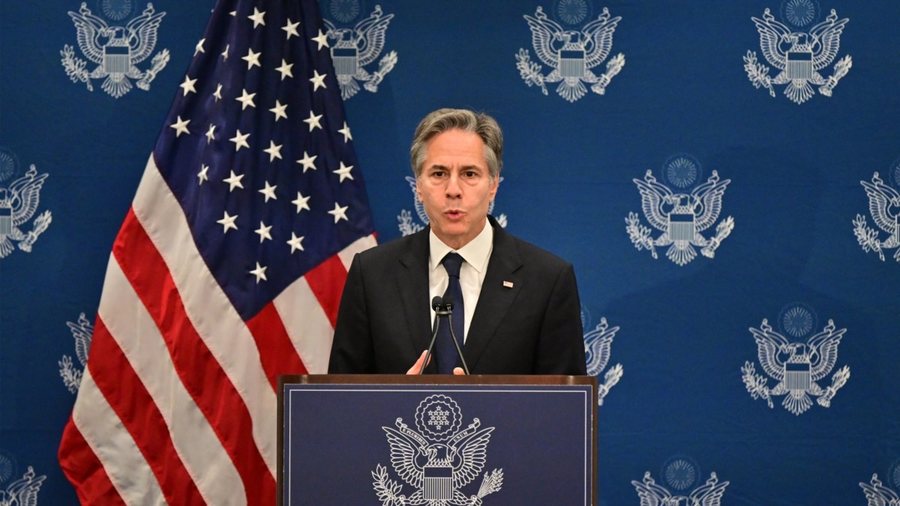
The Foreign Ministers of the NATO member countries will meet from November 27 to 29 in Brussels and the focus of the meeting will be the Russian aggression in Ukraine and the situation in the Western Balkans.
The US State Department said Secretary Antony J. Blinken will attend the meeting, including the first meeting of foreign ministers of the NATO-Ukraine Council.
"Secretary Blinken will emphasize NATO's unwavering commitment to Ukraine in its fight against Russian aggression, emphasize our support for democracy and regional stability in the Western Balkans, and discuss the priorities of the July 2024 Washington meeting." ", it is stated in an announcement of the Department of State.
NATO continues to support Ukraine, which hopes to one day join the Western military alliance, the expansion of which is opposed by Moscow, which does not look favorably on the aspirations of the Balkan countries for Euro-Atlantic integration.
NATO Secretary General Jens Stoltenberg, who during the week visited some of the countries of the Western Balkans, said that the alliance is considering a permanent increase of its military presence in the region, to keep tensions under control.
Additional troops were deployed in Kosovo following an armed clash between Kosovo police and a group of armed Serbs in the north of the country on September 24. A member of the police was killed during the attack in which three members of the armed group were also killed, in the event that is described as the worst since Kosovo declared its independence in February 2008.
Kosovo accuses Serbia of organizing and supporting the attack, while Belgrade denies links to the attack, responsibility for which was taken by Milan Radoicic, the former vice president of Lista Serbe, the largest party of Kosovo Serbs that was founded and is supported by Belgrade.
NATO deployed an additional 1,000 troops to Kosovo following the incident, and according to Secretary Stoltenberg this was the largest troop increase in recent years, proving how seriously the alliance takes the September 24 violence.
"Now we are considering whether we should have a permanent extension to make sure that this does not get out of hand and create any violence in Kosovo, or in the wider region," Secretary Stoltenberg said on Monday in Pristina.
A day later in Belgrade, he told Serbian President Aleksandar Vucic that the parties should reduce tensions and "the gathering of Serbian military forces near the border line" with Kosovo, "doesn't help the situation".
Under the pressure of the developments on the ground, Western diplomacy has been trying to speed up the normalization of relations, asking Pristina to establish the Association of municipalities with a Serbian majority, while Belgrade has de facto recognition of Kosovo.
Secretary Stoltenberg called for the continuation of the Kosovo-Serbia talks and for ending the growing tensions in Bosnia and Herzegovina.
During the visit to Sarajevo, he said that the allies strongly support the sovereignty and territorial integrity of Bosnia and Herzegovina, but "we are concerned about the divisive and divisive rhetoric, as well as malicious foreign interventions, including Russia."
Recently, fears have grown that Russia is trying to destabilize Bosnia and the rest of the Western Balkans to divert attention from its aggression in Ukraine. Moscow has openly supported the pro-Russian leader of the Bosnian Serbs, Milorad Dodik, who has repeatedly called for the country's partition and the union with neighboring Serbia of the Serb-controlled half of Bosnia.
Moscow supports Serbia in its opposition to Kosovo's independence, and although Belgrade has declared its aim to join the European Union, it maintains close ties with the Kremlin.
During the week, Serbia said it has purchased 11 Russian-made Mi35 combat helicopters from Cyprus. Serbia, which has declared itself militarily neutral and is part of NATO's Partnership for Peace, still relies on former Soviet military technology, although in recent years it has begun purchasing Western and Chinese systems.
The United States said it is aware that Serbia bought an old model of used Russian Mi35 helicopters from Cyprus, stressing that because of Russia's aggression against Ukraine, no country should do business with the Russian defense sector.
Serbia has refused to join Western sanctions against Russia, which has been isolated from the West because of its aggression in Ukraine, which is expected to be a topic of discussion at the meeting of the Ministerial Council of the Organization for Security and Cooperation in Europe to be held in Skopje on November 30 and December 1.
The Foreign Minister of North Macedonia, Bujar Osmani, said that the US Secretary of State, Antony Blinken, will participate in an informal dinner as part of the meeting.
Earlier it was announced the possibility that the Russian Foreign Minister Sergey Lavrov will also participate in the meeting. On November 24, the government of North Macedonia decided to ease the sanctions against the Russian Federation, removing the restrictive measure for the flight of Russian aircraft in its space. / VOA



Lini një Përgjigje