


 Shkruar nga Pamfleti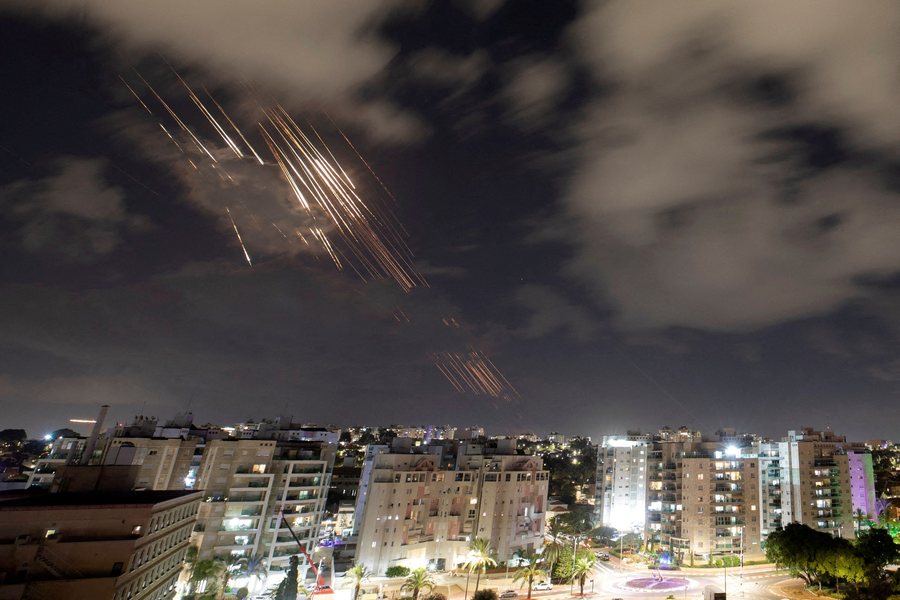
Hypersonic missiles, among new techniques that can deceive air defense systems...
On Friday, Iran responded strongly to the Israeli attacks by launching a barrage of ballistic missiles and drones towards Israel. Some of these missiles managed to penetrate air defense systems and hit strategic targets on Israeli soil.
Despite the fact that Israel intensively used its defense systems, including the Iron Dome, several Iranian rockets managed to hit Tel Aviv and other central areas, causing significant casualties and damage. The toll so far is over 240 killed in Iran from Israeli attacks, including women and children, and at least 24 killed in Israel from Iranian counterattacks, as well as hundreds injured.
In a statement issued on Tuesday, Iran claimed to have struck a military intelligence center and a Mossad operations center in Israel. This is considered a serious escalation and a demonstration of the fact that Israeli air defenses, despite their advanced technology, are not invincible.
What is Iron Dome?
Iron Dome is the most well-known component of Israel's air defenses. It is designed to intercept short- and medium-range rockets, as well as grenades fired by militants. It became operational in 2011 and has an effectiveness rate of about 90%. The system works by detecting an incoming rocket, calculating its trajectory, and sending an interceptor missile only if the target threatens a populated area.
But Iron Dome is only one layer of Israel's air defense. The system is part of a multi-layered architecture that includes:
Barak-8: against medium-range missiles.
David's Sling: for medium to long range missiles.
THAAD and Arrow-2/3: for long-range and intercontinental ballistic missiles.
How does air defense work?
Air defense systems consist of three elements: radars that detect enemy missiles, command centers that analyze the target, and launchers that send out interceptor missiles. Typically, for every enemy missile, Israel launches two interceptors to increase the chance of success.
However, the number of interceptor missiles is limited. It is not known exactly how many defensive missiles Israel has at its disposal, but a massive attack like the Iranian one puts the system under extreme pressure.
How is Iran overcoming these shields?
1. Filling defense systems with targets
Iran launches a large number of missiles and drones simultaneously, many of which are useless – simply to fill up radars and wear down Israeli interceptors. These deceptive targets, known as “decoys,” cause the systems to expend defensive missiles before the real missiles arrive.
2. Hypersonic missiles
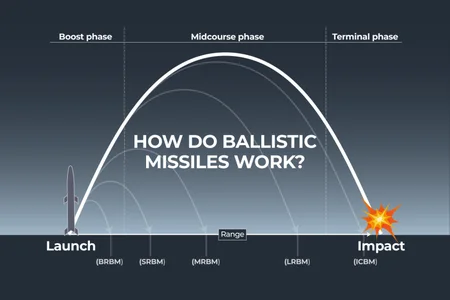
Iran has developed missiles that travel at speeds greater than Mach 5, are launched quickly, and travel on unpredictable trajectories. Some of them have so-called HGVs (Hypersonic Glide Vehicles), which zig-zag in the atmosphere, making prediction and interception nearly impossible.
3. Cruise missiles
Unlike ballistic missiles that fly high, cruise missiles travel close to the surface, like drones. They are slower, but harder to detect and neutralize. Iran has used missiles such as the Hoveyzeh against Israel.
4. Anti-radar technology
Some missiles are equipped with technologies that make them more difficult for radars to detect, through signal jamming or reduced reflection.
Can the missiles run out?
Experts warn that the current war is developing in an “attritional” pattern – that is, a long-term conflict, where the sides consume each other’s resources. The number of missiles Iran has remains unclear, but it is one of the largest arsenals in the region.
On the other hand, Israel's capacity to launch interceptors is not unlimited. In particular, the Arrow-2 and Arrow-3 systems, which are used to defend against powerful ballistic missiles, are expensive and scarce.
The United States could help with airstrikes on Israeli aircraft, but this would reduce the stealth of the fighter jets. The 1,000–1,500 km distance between Iran and Israel makes any intervention more complex and logistically expensive. / Adapted from “Pamphlet” by “Al Jazeera”







Lini një Përgjigje