


 Shkruar nga Pamfleti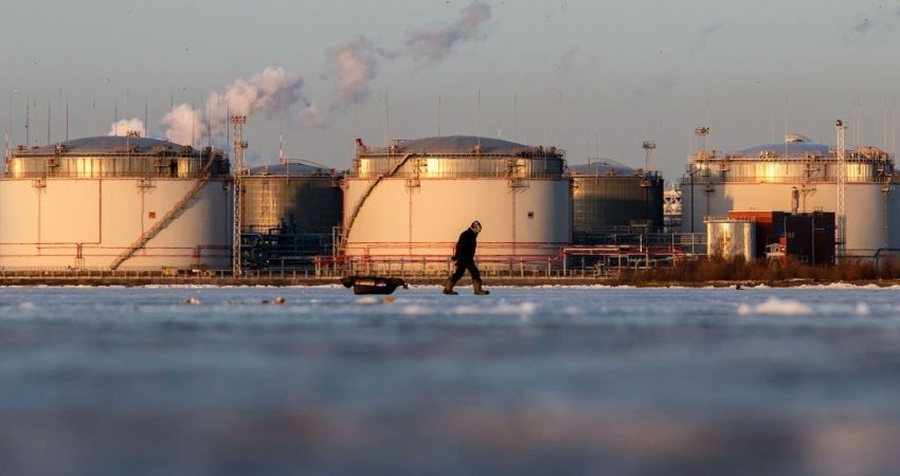
Washington has temporarily eased sanctions on Russian offshore oil, amid the Trump administration's efforts to stem rising prices and uncertainties over global supply.
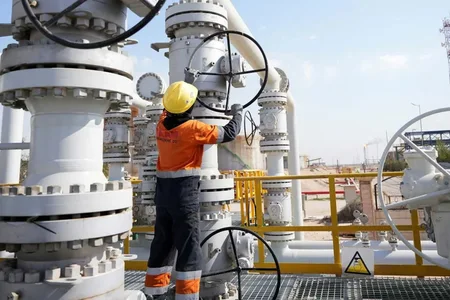
The United States has decided to temporarily ease sanctions on Russian oil currently in sea transport, in an effort to stabilize global energy markets and reduce pressure on prices.
The decision was announced by US Treasury Secretary Scott Bessent, who announced that a 30-day temporary authorization has been granted allowing countries to purchase Russian oil that is already in transit.
According to him, the administration of President Donald Trump aims to curb the rise in energy prices, while in the US the average fuel price has increased by about 65 cents per gallon over the last month.
Bessent stressed that the measure is limited and is not expected to bring major financial benefits to Russia, as most of its energy revenues are secured through taxes imposed at the time of production.
"Trump is working to keep prices low. This limited and short-term measure applies only to oil that is already in transit. The decision will not bring significant financial benefits to the Russian government ," he said.
However, international markets remain tense. The price of Brent oil, the global benchmark, remained above $100 a barrel in early trading on Friday.
This increase comes at a time when concerns about global supplies have increased due to the conflict in the Middle East and tensions between the US-Israel and Iran.
The Strait of Hormuz at the center of the crisis
The situation has also been exacerbated by tensions in the Strait of Hormuz, one of the world's most important energy transport corridors, through which about 20% of global oil and gas trade passes.
Although the US administration has promised to escort tankers passing through this area, maritime traffic has not yet returned to normal levels.
Meanwhile, Iran has warned that it will not allow oil exports from the region as US and Israeli attacks continue.
Last week, Washington also authorized Indian refiners to temporarily buy Russian oil for 30 days, a decision that marks a shift from previous statements by Trump, who had claimed that India would stop buying it.
According to Fox News reports, as of Thursday, there were about 124 million barrels of Russian-origin oil at sea in tankers around the world.
Following Bessent's announcement, the price of Brent crude rose 0.3% to $100.74 a barrel, having crossed the $100 threshold earlier in the week for the first time since Russia's invasion of Ukraine four years ago.
Moscow responded by saying it was increasingly inevitable that the US would ease sanctions on the Russian energy sector. Russian economic envoy Kirill Dmitriev said that without Russian oil the global energy market could not remain stable.
However, some of Washington's Western allies have opposed this approach. French President Emmanuel Macron stated that the blockade of the Strait of Hormuz does not justify the lifting of sanctions on Russia.
" The paralysis of the Strait of Hormuz does not justify the lifting of sanctions against Russia," he said.
In an effort to stabilize the market, the International Energy Agency has decided to release 400 million barrels of oil from emergency reserves, the largest decision of its kind in the organization's history.
However, tensions in the region continue to increase uncertainty. Iran has warned that oil prices could reach $200 a barrel, while US media reports have also said that mines have been placed in the Strait of Hormuz.
President Trump has tried to downplay concerns about high energy prices, pointing out that the US is the world's largest oil producer.
However, with midterm elections approaching in November, rising fuel prices could become a political challenge for his administration and for Republicans who hold a narrow majority in Congress./ Adapted from "Pamphlet" by "The Guardian"


Lini një Përgjigje