


 Shkruar nga Pamfleti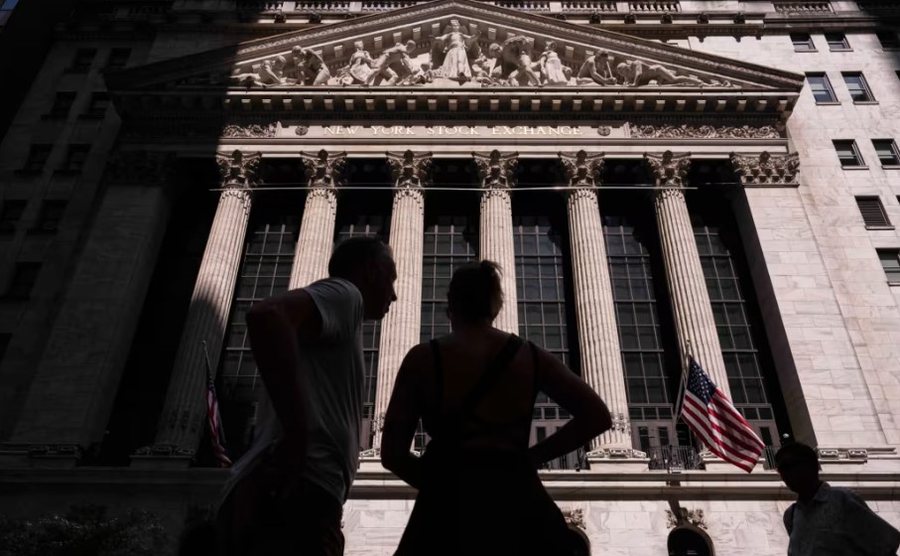
Stocks remain near record highs despite President Trump's threats to fire the Federal Reserve chairman...
In April of this year, when President Donald Trump began flirting with the idea of firing Federal Reserve Chairman Jerome Powell, financial markets reacted immediately: stocks and the dollar fell, while Wall Street analysts stood up, calling this a “red line” that could not be crossed. Central bank independence, they said, is one of the pillars of the country’s financial health, a topic that is no joke.
Powell himself declared that such a dismissal is impermissible by law, while a whole chorus of analysts emphasized the "sanctity" of the Federal Reserve's independence.
But let's go back to July: Trump waves a draft letter of dismissal for Powell before lawmakers. And the markets? They move forward without any apparent concern.
Stocks are near record highs. The dollar and bonds briefly faltered, but quickly stabilized after Trump denied he planned to formally fire Powell.
This situation highlights two possibilities:
-The markets now operate on the TACO philosophy, "Trump Always Chickens Out," where everything the president says is expected to fade or be changed.
-The "red line" for central bank independence is nothing more than an academic dogma, not an ironclad financial law.
And the only way to find out is... to cross the red line.
Trump planned the impeachment because of a costly renovation
According to a source familiar with the matter, Trump said during a meeting with lawmakers Tuesday night that he would fire Powell over a costly renovation of the Federal Reserve headquarters. A person present confirmed that Trump also showed a document he called a “dismissal letter.”
The next day, Trump publicly declared that Powell's firing was "very unlikely... unless he cheated." (Meanwhile, the director of Trump's Office of the Budget had earlier accused Powell of lying to Congress about this renewal, which the president sees as grounds for firing.)
Simply put: The United States has never been closer to a scenario where the president attempts to oust the head of the central bank. And Wall Street doesn't seem to care.
A warning that no one is listening to
Just a few days ago, George Saravelos, global head of currency strategy at Deutsche Bank, wrote that “it goes without saying that Powell’s dismissal would be seen as a direct attack on the Fed’s independence,” an essential element for maintaining inflationary stability.
“In extreme cases,” he warns, “currency and bond markets could collapse, as inflation expectations rise and risk premia widen against a backdrop of institutional erosion.”
TACO model
However, none of this is happening. And perhaps we are seeing proof that markets are so accustomed to chaos that the old rules no longer apply.
“A pattern is emerging: the administration threatens radical measures, markets react negatively, and then it backs down,” says Jonathan Doh of Villanova University. “Each time, the market response gets weaker and weaker.”
This is the TACO model: Trump always backs down. Investors sell when he threatens, buy when he softens, and take advantage of the market rally. In fact, now they no longer wait for the panic phase, they simply assume that Trump is not serious until something concrete happens.
And yet, even as stocks remained quiet, currency and bond markets reacted. Before Trump's denial on Wednesday morning, the price of gold and long-term bonds rose, while the dollar fell by almost 1%.
Steve Sosnick, senior strategist at Interactive Brokers, said the moves were normal. But he noted: “In theory, bond watchers should have reacted more strongly.” (These are investors who use their buying power to signal disapproval of policies.)
Do markets no longer care about the Fed's independence?
Sosnick offers a troubling hypothesis: perhaps investors are so excited about lower interest rates, Trump's top priority, that they no longer care if those rates come as a result of political interference.
"It's a crazy idea. I believe that central bank independence is essential — and I think I'm not the only one. But maybe that's not the case anymore," he says.
Even more worrying is the perception of the administration itself.
“Was this a test balloon?” Sosnick asks. “A way to test how the markets would react if Powell were actually fired? And if so, the weak market reaction may have encouraged the president to act. Because, let’s be honest, the reaction wasn’t catastrophic at all,” he adds. /Adapted from “Pamphlet” by “CNN”



Lini një Përgjigje