


 Shkruar nga Luka Petroviç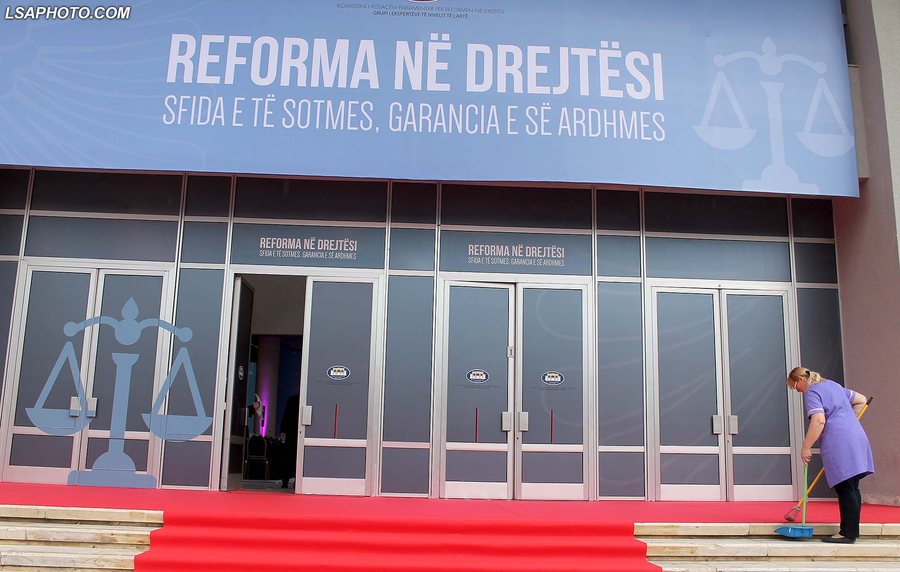
Was justice reform in Albania a dangerous US-EU experiment?
The European integration process in the Western Balkans remains an open, often contradictory and controversial journey. Although governments in the region continue to try to demonstrate progress, reforms rarely translate into real institutional change. This contrast is particularly evident in the areas of the rule of law and the fight against corruption, where there is often more emphasis on formal compliance than on democratic substance.
For decades, the United States has played a crucial role in shaping political and institutional developments in the Balkans in line with the EU’s enlargement agenda, especially in countries such as Montenegro, Serbia, and Albania. However, despite stable diplomatic relations, the concrete results of reforms remain controversial.
Across the region, countries aspiring to EU membership face deep institutional weaknesses, political abuse, and endemic corruption. A contributing factor is the very structure of the accession process, which often favors immediate results, such as arrests, indictments, and the establishment of new institutions, over procedural guarantees and respect for legal standards.
From the perspective of Brussels and Washington, the Western Balkans have been seen as a strategic and economic opportunity. The NATO membership of countries such as Montenegro and Albania has reinforced this perception, considering them as the vanguard for EU integration. Ambitious justice reforms in Albania, supported by the Obama and Biden administrations, aimed to bring Albanian institutions into line with European standards. But, like many foreign-led initiatives, the combination of incentives and institutional design has produced unexpected and poorly managed consequences.
Judicial reform in the Balkans has encountered repeated structural obstacles. In some cases, models supported by international partners have strengthened prosecutorial power at the expense of democratic control. This has produced accusations of selective justice and political persecution, rather than creating real accountability. The quest for international credibility has been accompanied, in some cases, by a covert concentration of power within the country.
The examples of Montenegro and Serbia illustrate these dynamics. Despite adopted strategies for judicial reform, Montenegro has made little measurable progress. In Serbia, the cessation of USAID funding in early 2025 highlighted the manipulation of the reform narrative for domestic political purposes. Measures against NGOs and human rights defenders, justified on the pretext of foreign interference, raised serious concerns in the EU.
The case of Albania represents the clearest illustration of the tensions between international expectations and institutional reality. The creation of SPAK after the 2016 constitutional reform was promoted as the main pillar of the new justice. With over $27.5 million in support from the US and deep involvement from the EU, expectations were high. But the reality turned out to be different.
SPAK was transformed into a powerful institution, run by prosecutors with minimal democratic control. Warnings about the risk of Albania becoming a testing ground for an unrestricted model of prosecutorial independence were initially ignored. Today, criticism abounds: SPAK’s decision-making is often seen as politically motivated and driven by external interests, not by impartial justice.
The incentive structure explains this tendency: success is measured by sensational arrests and speedy trials, regardless of transparency or procedural fairness.
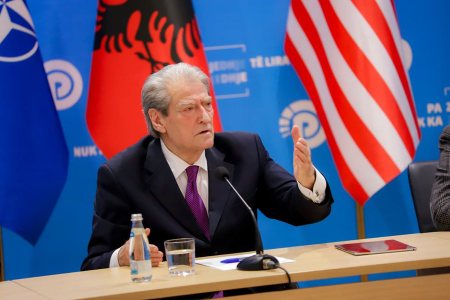
International lawyers have warned that the prolonged detention of an elected official without trial seriously undermines democratic representation and public trust in justice. In the context of EU integration, this practice risks confusing law enforcement with political performance, transforming the “fight against corruption” into an instrument of power.
The Western Balkans, and Albania in particular, need deep and lasting justice reforms. But progress is not measured by the number of arrests, but by respect for democratic principles. Limiting pre-trial detention, transparency in criminal prosecutions, and compliance with European standards of due process are vital. Without these guarantees, reform risks becoming a farce that undermines the rule of law itself. / Adapted from "Pamphlet" by " New Eastern Europe "







Lini një Përgjigje