


 Shkruar nga Pamfleti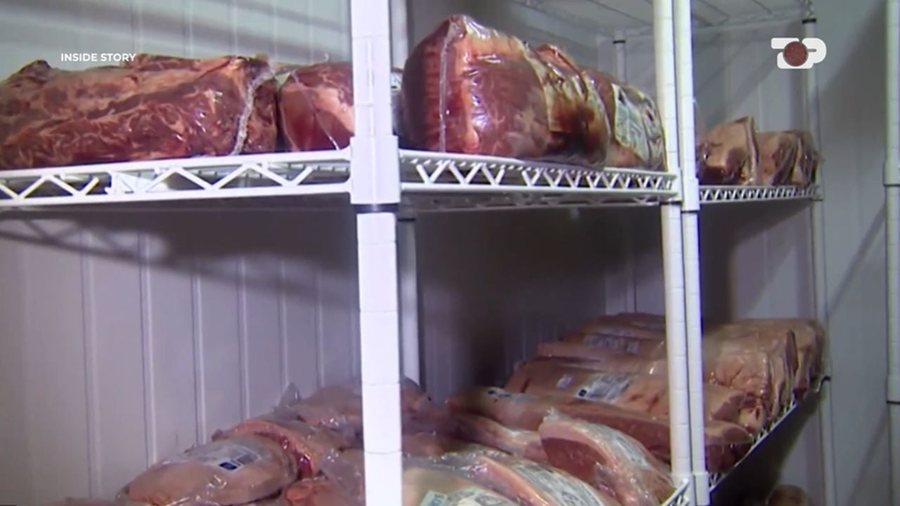
Brazil is the country from which Albania imports most meat. It is precisely from that country that problematic shipments have been identified in most cases.
According to customs data, meat imports from this country are growing at a frightening pace and have doubled in just a four-year period. Thus, if in 2020 about 6,500 tons of meat were imported, in 2024 a full 13 thousand tons were imported.
In all cases, Albania imports from EU-certified farms. However, this does not exclude the possibility of cases of abuse.
" Can it happen that imported meat products enter altered and are not part of EU licensing? Yes, it can happen, " said Kapllan Sulaj, Dean of Biotechnology and Food, UBT.
What risks does a person face if they become infected with salmonella?
Salmonella is a bacterial infection that causes diarrhea, fever, and stomach pain. In some cases, it can lead to serious health complications, even life-threatening.
" Salmonella are pathogenic bacteria that directly threaten the life of the consumer. Depending on the infection, the type of strain, they can threaten at different levels, from simple levels to more complicated ones that can even be associated with death ," said Kapllan Sulaj, Dean of Biotechnology and Food, UBT.
Salmonella is transmitted by animals, mainly poultry, but also by humans. At the top of the list is the consumption of raw or undercooked meat, the consumption of eggs or milk that has not been pasteurized. The red alarm is also raised due to the fact that salmonella is contagious. In many cases it remains hidden.
" We need to know that we have a large influx of tourists, who can be carriers of salmonella, so the source can be animals, but also people who, by contaminating products and surfaces ," said Kapllan Sulaj, Dean of Biotechnology and Food, UBT.
Frequent cases of salmonella prove that, despite legal obligations, institutions have failed to guarantee food safety at all links in the control chain.
" The food safety control chain can fail in one of its links, but it can also fail in all of its links ," said Ana Vuksana, a food safety expert.
The ABC of food safety is traceability, a process that serves to guarantee the path a product has taken “from farm to table.” Confirmed data and interviews with experts speak of a distorted reality, far from guaranteeing safety.
“Cirkët eksperimentale me ngritje dhe shuarje të institucioneve e kanë bërë sigurinë ushqimore, duke e ekspozuar ndaj rreziqeve apo ndaj abuzimeve, të cilët shfrytëzojnë këto boshllëqe dhe abuzojnë me produktet që hedhin në treg”, u shpreh Ervin Resuli, ekspert i sigurisë ushqimore.
Problemi i ushqimeve bëhet më i mprehtë kur vjen puna te produktet me bazë shtazore, siç është mishi, vezët apo qumështi, të cilët kanë protokolle më të rrepta sigurie.
Për ekspertët, një nga dobësitë më të mëdha është zinxhiri i shkëputur i kontrollit, i cili është i fragmentuar. Si pasojë, institucionet bëjnë “ping-pong” kur vjen puna për të mbajtur përgjegjësi.
Ngërçi i parë nis që nga pikat e inspektimit kufitar, ku mungesa e ambienteve frigoriferike të standardizuara cenon çdo protokoll që lidhet me sigurinë e produkteve.
“Porti i Durrësit sot nuk ka ambiente frigoriferike që do të mundësonin marrjen e mostrës në kushtet e duhura sipas standardeve. Që do të thotë se të gjithë mishrat e grirë vijnë në -18 gradë, që do të thotë se kjo temperaturë do të zbresë, qoftë edhe me 1 gradë, dhe kjo ngarkesë mund të kontaminohet me patogjenë të ndryshëm”, u shpreh Ana Vuksana, eksperte e sigurisë ushqimore.
Edhe Granit Sokolaj, që drejton një organizatë që merret me sigurinë ushqimore, thotë se situata është veçanërisht shqetësuese në portin e Durrësit. Sipas tij, në mjaft raste, kamionët frigoriferikë që importojnë mish iu nënshtrohen kontrolleve për drogë apo ngarkesa të tjera të paligjshme. Por, mënyra se si policia i hap nuk është e denjë për sigurinë ushqimore.
Kjo konsiderohet një praktikë e rrezikshme, që shpërfill çdo parim të sigurisë ushqimore. Për më tepër, dëshmon për një moskoordinim ndërinstitucional dhe mungesë profesionalizmi.
“Kur kontejnerët janë në ngrirje kalojnë në skaner për drogë. Herë pas here skaneri nxjerr disa pika të kuqe që presupozon se mund të jetë drogë apo armë dhe duhet të hapen. Kur hapen, rezultojnë topa të ndryshëm akulli, sepse ai mund të jetë 1-2 muaj për të mbërritur”, u shpreh Granit Sokolaj, ekspert i sigurisë ushqimore.
Kjo është një praktikë që ndiqet vetëm në Shqipëri në këtë formë. Ekspertët sugjerojnë që AKU dhe Ministria e Bujqësisë duhet të marrin masa për të shmangur risqet e kontaminimit.
“Policia hap një produkt që duhet të rrijë në -18 gradë, e hap në 40 gradë, e hap pa asnjë kusht higjieno-sanitar, fut qentë për kontroll dhe këtu është cenuar siguria ushqimore”, u shpreh Granit Sokolaj.
Gjatë kontrollit në doganë ka dy procedura: kontrolli fizik, që nënkupton kontrollin fizik të mjetit, të ngarkesës apo të dokumentacionit, dhe më pas është kontrolli analitik. Pikërisht këtë proces ekspertët sugjerojnë të kryhet diku tjetër, duke ruajtur të gjitha veçoritë e identitetit të ngarkesës.
"The containers should not be opened there, but in refrigerated warehouses or in the importer's warehouses. It is tracked by the police, taken to the warehouses and opened there. The meat is put in refrigerated rooms, so that the meat that comes to us is not contaminated," said Sokolaj.
For Ervin Resulin, who says that the situation has changed in the last year at the port of Durres, in many cases it is the institutions themselves that complicate the situation.
"A year ago, a refrigeration point was built in the port of Durrës because the state institutions themselves were opening the containers in the port square, at a temperature of 40 degrees, and were sampling... which means that the institutions themselves are complicating the situation and even putting them in conflict with business operators," said Ervin Resuli, a food safety expert.
For Ana Vuksana, former head of the AKU, even if the trucks are inspected at the premises of the specific entity, the chain is still broken and breaks. According to her, the AKU inspectors do not have safe equipment for transporting samples to the ISUV laboratory.
"The even more serious problem is the fact that the inspector, in order to take it to the ISUV where the analyses are carried out, fails to ensure the proper thermal regime, i.e. -18 degrees, because the inspector takes it with those refrigerated boxes that we take to the beach," said Ana Vuksana, a food safety expert.
Experts insist that the malfunction of this link also calls into question the results of the analyses that this load may undergo.
"No matter how accredited the laboratory or the analysis, the moment it starts leaking into the sample, it inevitably compromises the analysis," said Ana Vuksana.
This entire procedure has another problem. Due to the lack of proper equipment, the anonymity of the sample being analyzed is not guaranteed. This could compromise the process.
"Another problem is maintaining the anonymity of the sample, as inspectors do not have the means to seal it after taking the sample, which could compromise both the sample and the quality of the analysis," said Vuksana. / Inside Over




Brazili eshte zyrtarisht pro Palestines, dhe denon genocidin. Kush e kontaminoi exportin Brazilian me "salmonele" ???