


 Shkruar nga Pamfleti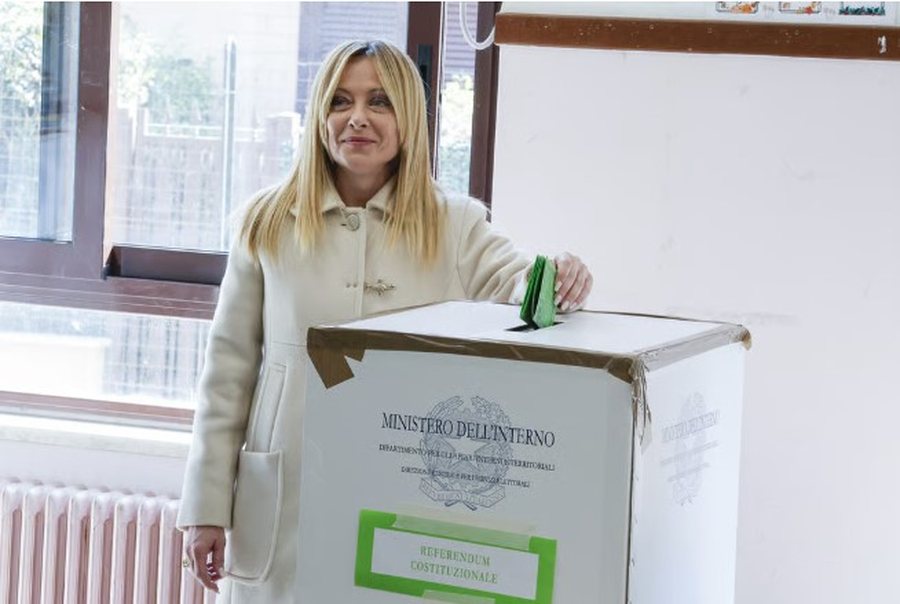
Turnout reaches around 58.7%, while the vote remains divided between the reform proposed by the government and the opposition's opposition.
Italians voted on 22–23 March 2026 in a constitutional referendum aimed at significant changes to the justice system. According to exit polls published by Italian media (Opinio/Rai, Swg/La7 and YouTrend for Sky), the “No” camp is easily in the lead with 49–53%, while the “Yes” camp is ranked between 47–51%. The final results are expected after the official vote count.
According to preliminary data from the official platform “Eligendo”, voter turnout reached around 58.7%, a high level compared to previous referendums. However, turnout shows significant regional differences: in the north of the country it often exceeds 60%, while in the south it fluctuates between 40% and 50%. For example, in Emilia-Romagna over 65% of citizens voted, while in Sicily around 46%.
What does the reform foresee?
The referendum is related to a constitutional reform of justice that affects several articles of the Italian Constitution. Its essence is:
- Separation of the careers of judges and prosecutors : currently they follow a common path and can switch roles under certain conditions; the reform aims to finally separate them into two separate careers.
- Creation of two High Councils of Magistracy (CSM) : one for judges and one for prosecutors, instead of the current single body.
- Selection of CSM members by lottery : instead of elections, a portion of the members will be selected by lottery to reduce the influence of internal groups.
- Creation of a High Disciplinary Court : this new body will deal with violations by magistrates, removing this competence from the CSM.
Arguments for and against
Supporters of the reform, mainly from the government and right-wing parties, argue that separating careers will strengthen the judge's impartiality and guarantee a clearer balance between the prosecution and the defense.
Opponents, including part of the opposition and sectors of the judicial system, warn that the changes could weaken the independence of the judiciary and increase political influence, particularly through changes to the functioning of the CSM.
Political context
The referendum also carries political weight. Prime Minister Giorgia Meloni's government strongly supports the "Yes" vote, while the main opposition supports the "No" vote. However, political leaders themselves have stressed that the result will not have immediate consequences for the stability of the government.
Regardless of the final result, the high level of participation is seen as a signal of civic engagement in an issue that directly affects the functioning of the rule of law in Italy. / Pamphlet








Lini një Përgjigje