


 Shkruar nga Pamfleti
Trump's plan responds to the Israeli public's top priorities. But the proposal also offers Hamas the opportunity to achieve one of its Holy Grails, unless Netanyahu manages to force them to refuse.
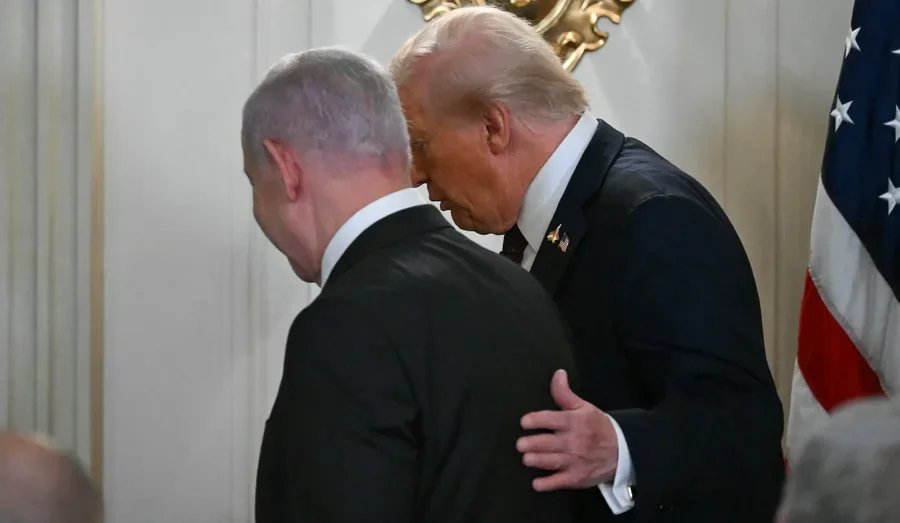
The plan to immediately end the war in Gaza, presented by US President Donald Trump on Monday, includes many vague clauses that could be interpreted in multiple ways.
For example, it outlines a gradual withdrawal of the IDF from parts of the Gaza Strip currently held by Israel, based on undefined parameters and a vague timeline. It also calls for some level of involvement by the Palestinian Authority in the future Gaza government, but only after the Palestinian Authority undergoes extensive reforms that could be years away.
This plan has only two very clear parts. The first is the immediate release of all 48 hostages held by Hamas in Gaza, 20 of whom are believed to be alive. The second is the parallel release of 250 Palestinians serving life sentences for terrorism in Israel, in addition to the 1,700 other Palestinian prisoners or detainees held in Israeli jails.
The first clause is the most important priority for the Israeli public and the focus of a massive public pressure campaign. The second is the biggest victory Hamas can point to in the Trump plan and the main reason why, from Hamas' perspective, they should say yes.
There are currently just under 300 Palestinians serving life sentences in Israeli prisons. Many of them were convicted of murder, some of multiple murders. They are symbols for both sides of the Israeli-Palestinian conflict. Symbols of terrorism and evil from the Israeli point of view, symbols of struggle and national resistance for most Palestinians.
The late Hamas leader, Yahya Sinwar, the mastermind of the October 7 massacre, was himself once imprisoned in Israel’s prison system and was released as part of the Shalit hostage and prisoner swap deal in 2011. After his release, Sinwar vowed not to leave behind his “brothers” still behind bars. Their release was one of his main motivations for October 7.
During negotiations for a deal to end the war, Netanyahu’s envoys tried, as best they could, to reduce the number of “lifers” that Israel would have to release as part of a deal. Israel was not eager to release prisoners in general, but for Hamas, the Holy Grail was always terrorists with long sentences who were supposed to die in prison, not those scheduled to be released five or ten years later. Of course, for any Israeli government, and especially for a far-right government like the one led by Netanyahu, these are the most difficult prisoners to free.
Hamas didn’t gain much from Trump’s plan, which includes many legal loopholes that could be used by Netanyahu to sabotage a deal. But those parts of the deal were sweetened for the terror organization by a major achievement on the prisoner front. If it accepts the deal, it will release 250 of those prisoners, along with 1,700 Palestinians held by Israel during the war. Both numbers matter to Hamas, but the smaller one seems bigger.
Winning their release allows the group, as battered and weakened as it is after two years of war, to send a message to its supporters in Gaza, the West Bank and elsewhere that Hamas will leave no terrorist behind. And that, over time, they will find a way to secure the release of more of their people.
Hamas will probably negotiate hard on other parts of the plan, especially their demilitarization and the timeline for Israel’s withdrawal. But if it rejects the deal, it may never have another chance to free those 250 prisoners, many of whom have spent years behind bars. That alone could convince Hamas to ultimately accept the deal, despite its other shortcomings.
However, nothing is a done deal yet. Netanyahu is presenting the deal in political terms clearly intended to push Hamas to say no. All you have to do is follow his spokesmen in the Israeli media, from Channel 12’s Amit Segal to the pro-Bibi symphony orchestra on Channel 14, to understand the strategy: Humiliate Hamas into rejecting the deal. Anyone who cares about the hostages and the civilian population in Gaza should hope that this strategy will not succeed./ The Haaretz







Lini një Përgjigje