


 Shkruar nga Pamfleti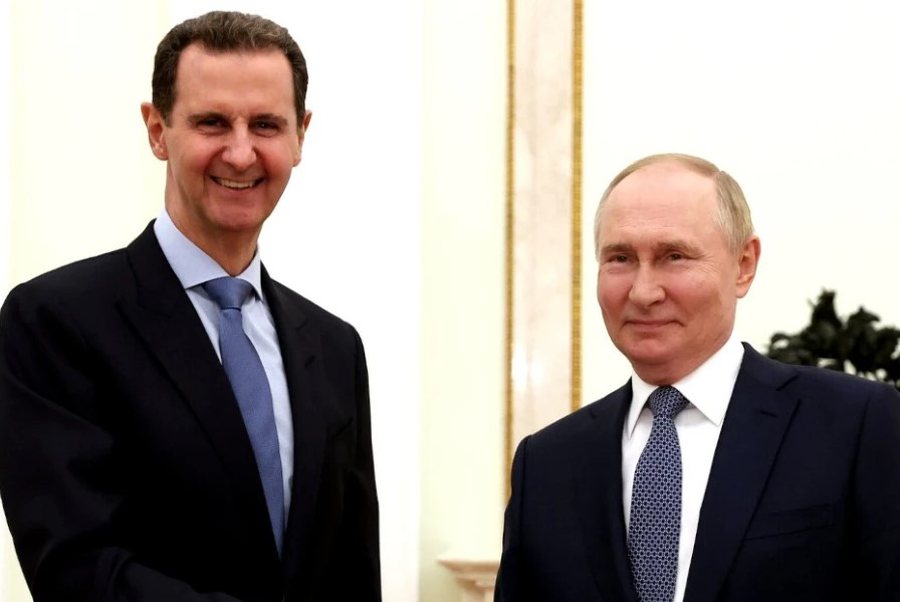
Bashar al-Assad, the man who ruled Syria for more than two decades, is in Moscow, far from his homeland, which he fled after jihadist rebels took control of Damascus.
His escape took place in extreme secrecy, where Russia, specifically by Vladimir Putin's decision, granted him political asylum.
Even Assad's brother was not informed of his departure. Russia, which over the years played a key role in keeping Assad in power through military intervention in 2015, after his ouster offered him a safe haven, ensuring he did not fall into rebel hands.
The choice of Moscow as a destination was not accidental. Russia has a long history of relations with the Assad family. Their ties date back to the 1970s, when his father, Hafez al-Assad, brought Syria into the Soviet Union's sphere of influence.
Over the following years, this relationship strengthened, especially after Vladimir Putin's intervention in the Syrian civil war.
However, despite strong ties between the two states, Assad's personal relationship with Putin has remained frosty and fraught with suspicion in recent years.
Putin has often expressed his displeasure at Assad's refusal to reform or cooperate with the country's opposition.
Putin's decision to offer shelter to Assad, despite their personal differences, appears to be based on strategic reasons.
The Russian leader sees Assad's defense as a sign of loyalty to his allies and a signal to the international community that Russia is not abandoning its partners.
In addition, Moscow provides medical care for Assad's wife, Asma, who suffers from leukemia.
As the Guardian reports, despite the luxurious life he had in Syria, Assad and his family are expected to live more isolated in Moscow.
Unlike the videos that showed his mansions filled with cars and luxury items, his life in Russia will be quite dark, under the close watch of the Russian authorities.
He is believed to be in a remote residence. The Guardian reports that although he is on the run, there are doubts that Assad has access to his estimated $2 billion fortune.
Assad's future in Moscow is uncertain. While providing temporary protection, the Putin regime also faces challenges that could affect Assad's long-term security. He himself seems to have accepted his isolation, with no possibility of political return.
His example is reminiscent of other exiled leaders, such as Ukraine's Viktor Yanukovych, who has lived in seclusion in Moscow since his 2014 overthrow.


Lini një Përgjigje