


 Shkruar nga Pamfleti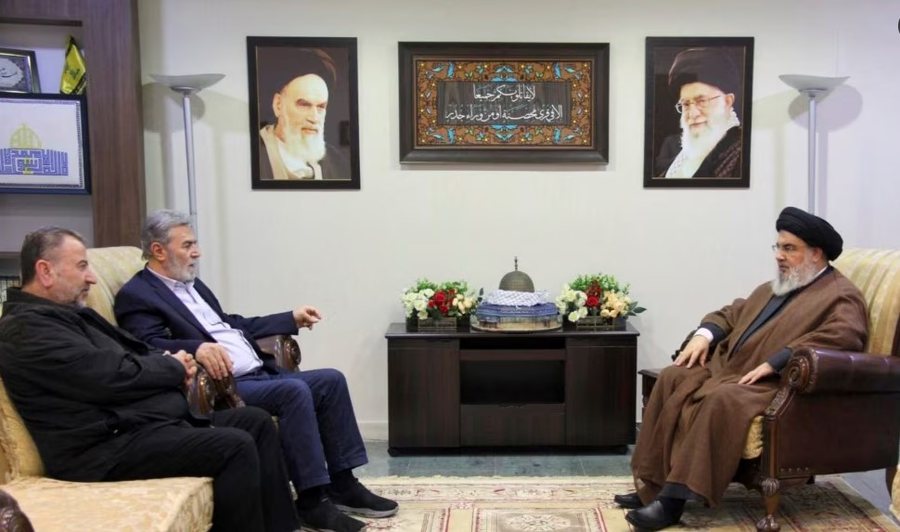
When the Lebanese paramilitary group Hezbollah announced last week that its leader, Hassan Nasrallah, would give his first public speech since the start of the Israel-Hamas war, almost the entire region held its breath.
Would Hezbollah, the Arab world's largest paramilitary force backed by Iran, continue to refrain from exchanging fire with Israel, or would it fully engage in war? In Lebanon, the streets emptied and people sat in front of screens to listen and then analyze his words. So did decision makers in Israel and throughout the Middle East.
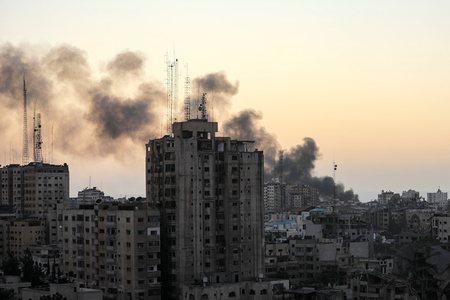
Hezbollah has been exchanging fire with Israeli forces along the border since October 7 when Hamas launched a surprise attack in southern Israel and ignited the war in the Gaza Strip. Both sides have suffered losses, but the fear is that the conflict will escalate and expand into a regional conflict. Mr. Nasrallah referred to these concerns during his speech on Friday. "Some say that I will announce that we have entered the battle," he said. "We became part of the battle on October 8." But he did not say that Hezbollah would engage more in fighting. Next, we take a look at the reasons why Hezbollah and its leader are key players in the trajectory of the Israel-Hamas war.
What is Hezbollah?
The Shia Muslim group Hezbollah is one of many groups supported by Iran and among governments in the region known as the Axis of Resistance. Founded in 1982 during the Lebanese civil war, Hezbollah's original objective was to put an end to the Israeli occupation of southern Lebanon, which it achieved in 2000. It was the first group Iran invested in to export its brand of Islamism. political. In its early days, the group also carried out attacks on American targets and subsequently Washington classified it as a terrorist organization. "Iran's support has helped Hezbollah consolidate its position as the most powerful political actor in Lebanon and the best-equipped militarily in the entire Middle East," Lina Khatib of the Institute for the East told the Associated Press news agency. Middle School in London.
After Hezbollah fighters ambushed an Israeli patrol in 2006 and took two Israeli soldiers hostage, Hezbollah and Israel fought a month-long war that ended without a winner, but in the meantime Israel bombed and caused extensive destruction in southern Lebanon.
In that period, Israel's objective was similar to its war with Hamas: the elimination of Hezbollah. But on the contrary, this group became even stronger – not only an armed force, but also a major political party in Lebanon.
However, domestic opponents criticized Hezbollah for maintaining a war arsenal and dominating the government. The group's reputation took a brief hit when it took over part of Beirut in May 2008 after the Lebanese government cracked down on its private telecommunications network.
Who is Hassan Nasrallah?
Born in 1960 into a poor Shiite family on the outskirts of Beirut and later relocated to southern Lebanon, Hassan Nasrallah studied theology and joined the Amal Movement, a Shiite political and paramilitary organization, before becoming one of the founders of Hezbollah. . He became Hezbollah's leader in 1992 after his predecessor was killed in an Israeli attack. Mr. Nasrallah is already ranked among the most powerful political figures in Lebanon.
Worshiped by many for his leadership of Israel's withdrawal from southern Lebanon, as well as his leadership during the 2006 war, his images appear on banners and in souvenir shops across the Arab world. However, there is opposition to him from the Lebanese who accuse him of linking the fate of the country with Iran.
Mr. Nasrallah is also regarded as pragmatic, with the ability to reach political compromises. He has lived in secret for years, guarding against attack by Israel, and gives speeches from undisclosed locations.
Comparison between Hezbollah and other groups that have the support of Iran
Hezbollah is the Arab world's most important paramilitary force, with a powerful internal structure as well as a substantial arsenal. According to Israel, the group has an arsenal of 150,000 high-precision missiles. In recent years, Hezbollah has sent forces to Syria to help ally Iranian President Bashar Assad against armed opposition groups. He also supported the rise of Iranian-backed militias in Iraq, Yemen and Syria. Khatib compared Hezbollah to a "big brother" of new Iranian-backed groups that "do not enjoy the same level of infrastructure or discipline."
Relations between Hezbollah and Hamas
While Hezbollah is doctrinally aligned with Iran, its relationship with Hamas is based on pragmatism. The Palestinian militant group was founded in 1987 as an offshoot of the Sunni Muslim Brotherhood movement. The group's political and financial support from Iran and Syria did not increase until 2006.
A rift erupted between Hamas and the Iran-backed axis over the Syrian civil war, with Hamas for some time supporting Syria's mainly Sunni opposition fighters.
Despite disagreements over Syria, "over the past five years, relations improved at a rapid pace," says Qassim Qassir, a Lebanese analyst close to Hezbollah. Although many senior Hamas officials lived in Qatar and Turkey, which backs the Syrian opposition, the group's return to the Iranian wing put them in a tricky situation. Several Hamas officials, including second-in-command Saleh al-Arouri, have since moved to Lebanon, where they have the protection of Hezbollah and a presence in Lebanon's many Palestinian refugee camps.
How far is Hezbollah willing to go to protect Hamas?
For Hezbollah, fully entering the Israel-Hamas war would risk dragging Lebanon, a country beset by major economic problems and internal political tensions, into a conflict it cannot afford, fueling internal opposition to the group. But standing aside while Israeli troops take control of the Gaza Strip could compromise Hezbollah's credibility, and a Hamas defeat would be a blow to Iran. Hezbollah's continued strife on Israel's northern border shows support for Hamas and keeps open the threat of a wider intervention. Mr. Qassir interpreted the message after Nasrallah's speech as: "If you don't want the regional war to expand, then the war (in Gaza) must stop." But it is unclear how long Hezbollah can maintain this delicate balance, with Israel seemingly determined to destroy Hamas and the number of Palestinians killed in Gaza reaching over 10,000.
"If there is a total collapse in Gaza and things get to a point where they have to be fully involved, then they will be ready," Mr Qassir said. / VOA



Lini një Përgjigje