


 Shkruar nga Pamfleti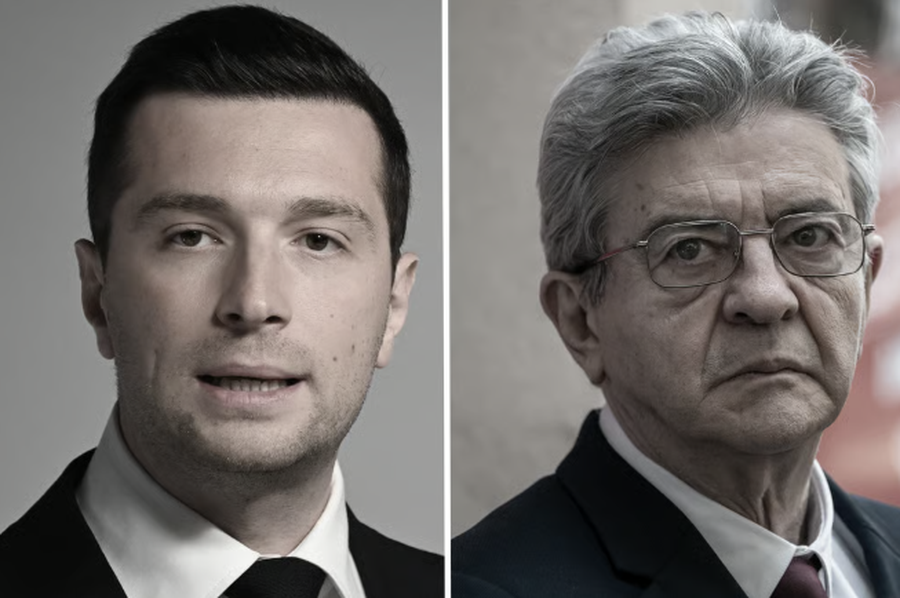
The French political scene is experiencing increasing polarization, as leading figures on the radical left and far right are positioning themselves for a possible showdown in the upcoming presidential elections.
The leader of the radical left, Jean-Luc Mélenchon, has repeatedly argued in recent years that French politics is moving towards a clear division between two opposing camps. According to him, the political battle will take place between the forces he represents and the far right, while the traditional center-left and center-right parties are gradually losing their influence.
On the other hand, leaders and supporters of the National Rally (Rassemblement National) believe that the party's president, Jordan Bardella, could face Mélenchon or another left-wing candidate in the second round of the presidential election.
The French electoral system provides for presidential elections to be held in two rounds. In the first round, all candidates compete, while the two most voted advance to a runoff, where the winner of the presidency is determined.
Meanwhile, Marine Le Pen and Jean-Luc Mélenchon have intensified their political clashes, especially in online debates. Discussions between them have focused mainly on the economy and the vision for France's future.
The far right criticizes the left's idea of a "new France," arguing that this approach creates social divisions between the younger generation, many of whom have immigrant backgrounds, and citizens with older French roots. On the other hand, representatives of the left present their project as an attempt to build a more inclusive and equal society.
Developments indicate that the upcoming presidential race could be characterized by a direct confrontation between two forces that represent profoundly different visions for the future of France, reflecting the major changes taking place in the country's political landscape.



Lini një Përgjigje