


 Shkruar nga Andi Bushati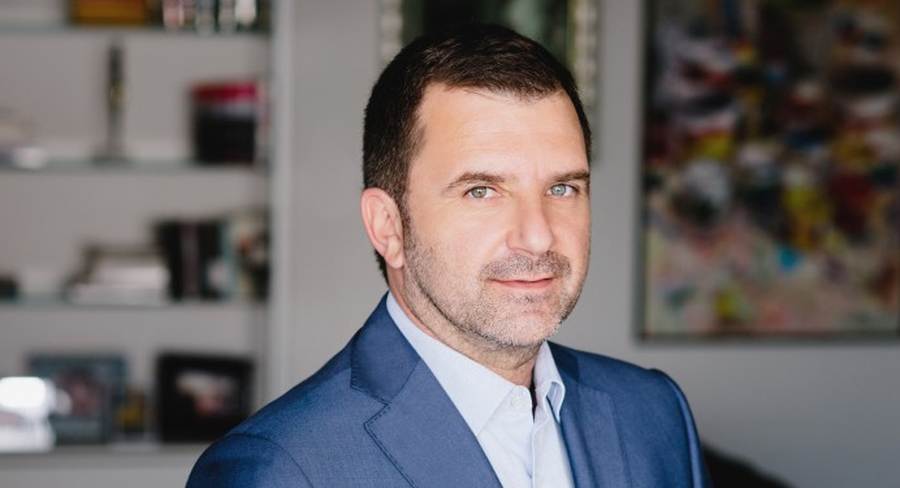
Nobody is talking about a model change.
Paradoxically, for the first time in three decades, since Albania has been holding pluralistic elections, this May 11th, voters will have the opportunity to choose not just one alternative, but at least two.
Despite the fact that ten electoral battles have been fought, where the parties squabbled over who is more of a thief or less of one, who loves democracy more or desecrates it worse, for all our parties the model of economic development has been the same: the neoliberal one, where the rich have become increasingly richer, ever deepening the inequality with those at the other end of the rope.
So, in this sense, we have so far developed electoral challenges where voters only had the illusion of being decisive, as they were not given the opportunity to change the essence of a predetermined economic model.
Whichever party wins, whoever is elected prime minister, the path of "development" will not change.
Even Rama in opposition in 2013, who tried to reverse this trajectory, speaking for the first time about deepening inequalities, using fair taxation as a remedy against it, quickly abandoned this philosophy and returned to the previous tradition.
Therefore, today we have reached a dead end, where although the oligarchs, the businessmen who have benefited from the favors of political power, are widely criticized, almost no one offers a recipe for how this anomaly can be resolved in the future. The only one who does this is the Joint Movement.
Just take a quick look at its economic program and you will see that you are not dealing with some young Marxists who hate capitalists - as they often anathematize - but with concern for a fairer, more honest society with more equal opportunities for all. Let's make a simple comparison. Every time the parties that call themselves opposition appear in the television studios, they claim that they will fix the situation by fighting corruption and by trusting in the "magic of the market" that, by functioning freely and unimpeded, fixes things "as if by the hand of God". No one talks about changing the model.
The DP does not accept the existence of the oligarchy, but only that of businessmen subservient to Rama and seeks to liberate them through fair competition and flat taxation. The same thing is promised by Agron Shehaj's Mundësia, for which there is no public and no social state. Adriatik Llapaj never talks about how the economic injustice of those who have benefited abusively in these years will be corrected.
The only ones who have this concern are Arlind Qori and his political companions. They do not avoid it, but on the contrary, have put at the heart of their program the concern for the restoration of equal opportunities and chances in society. They are the only ones who do not see the correction of the injustices to date as a dirty loot that needs to be washed in the SPAK's dirty washing machine, but as an anomaly that needs to be resolved with political measures and reforms. If none of the other parties can answer the question: "what will happen to those who have benefited unfairly so far, the Together Movement has the solution, "they will pay more".
Thus, if today most right-wing parties propose a flat tax, if Rama applies the same taxation for the richest (profit and dividend tax the same for everyone), Arlind Qori's party proposes something completely different. According to it, those who earn more should contribute more, in the name of social solidarity.
So, according to them, someone who earns a pittance cannot pay the same percentage of profit as someone who pockets billions. For the latter, they foresee a profit tax of up to 20%. Likewise, dividends for large shareholders, who do not use their profits for investments, but for luxury, for second and third villas, yachts or super expensive cars, will no longer be taxed at 7% but at 15%. Even bank directors and corporate managers who receive huge salaries of over 4 thousand euros must return 35% of their salary to society.
This is not only required in the name of social solidarity, according to which no one can feel good among the poor, but also as an obligation to review past injustices.
Of course, viewed from a leftist perspective, this program can be appreciated for the humanistic ideals and values of equality it upholds. But its social utility goes beyond that. It transcends the division between right and left, since by competing with such a platform, Qori and his friends give voters the opportunity to have the right to choose at least between two alternatives, that of a wild capitalism, which all other parties defend, and the other, for a more just, more honest and more solidary social democratic approach.
By competing for the first time in these political elections, the Together Movement has enriched them. Therefore, even though it was chosen by lot, number 2 on the ballot suits it best. Because thanks to it, for the first time in these 30 years, voters will have the fortune of a double alternative, opposite to the neoliberal dogma that they have been condemned to choose until now.


Lini një Përgjigje