


 Shkruar nga Pamfleti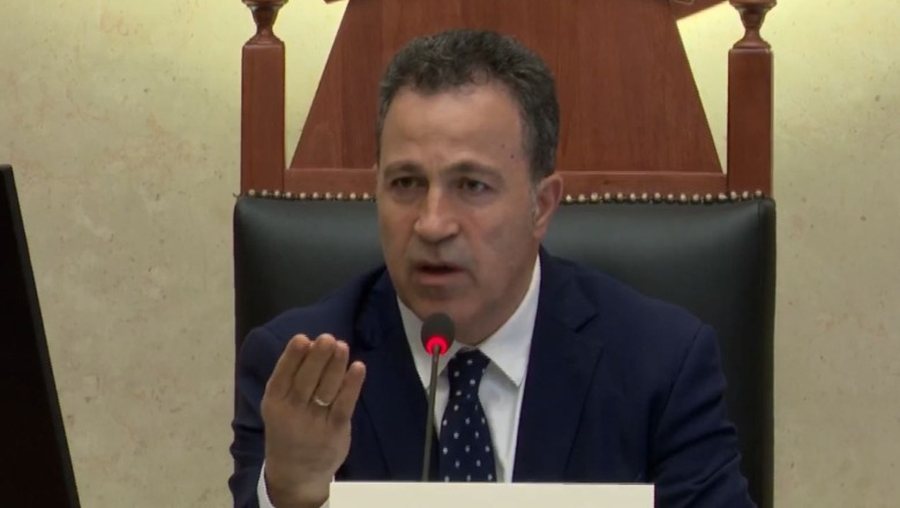
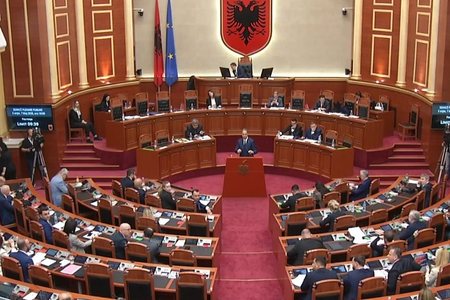
The opposition's request for an interpellation in the Assembly regarding the issue of tender abuse by the National Agency for the Promotion of Agricultural and Rural Development (NASHI) has been rejected. The interpellation was rejected with 60 votes against the majority.
The opposition's request was initially rejected by the Speaker of the Parliament, Niko Peleshi. According to the Speaker, interpellations cannot be held on matters that are under criminal investigation, as it would be an interference in the power of the judiciary.
He added that the sole reference to media reports does not constitute grounds for a parliamentary interpellation, especially when the matter is still under investigation and there is no final decision from the competent authorities.
According to the Assembly, the DP's request was related to investigations into serious criminal offenses, including corruption and organized crime, and therefore should be handled only within the framework of criminal proceedings.
"First, interpellation, as a constitutional instrument of parliamentary control, cannot be used to allow members of the Council of Ministers to provide explanations on matters that are under criminal investigation, for which they do not even have the competence to express themselves, and for which any intervention or comment would be contrary to the principle of separation and balance of powers."
Secondly, the content of the request, in essence, constitutes an attempt to transfer to the Assembly hall a debate that belongs exclusively to the jurisdiction of the judicial authorities, aiming at the creation of a "political court" on the basis of information not definitively administered by the judicial authorities. Such an attitude conflicts with the constitutional standards of the rule of law and with the role of the Assembly as a legislative body and not as an investigative or judicial body.
Thirdly, the questions addressed in the request presuppose the existence of the Prime Minister's knowledge of detailed elements of a criminal investigation, which is not supported by a legal norm. The Prime Minister has no legal obligation to have knowledge of the content of the investigative files, nor can he be required to comment on them, as long as these matters are under the jurisdiction of the judicial authorities.
Fourth, the constant reference in media reports does not constitute the purpose of carrying out an interpellation as a form of parliamentary control, especially in cases where the matter is still under investigation and there is no final conclusion from the competent bodies.
"Fifth, the very nature of the issue raised - related to investigations into serious criminal offenses, including corruption and organized crime - requires treatment within the framework of criminal proceedings and not a parallel political dispute, which could undermine the investigation of the case and affect the public perception of the justice process," said the response returned by the Assembly-Democratic Party , Peleshi said.




Lini një Përgjigje